Skip to content

FAQs

Find the question, then the product.

Search or jump by topic. Answers stay on the public side of the work — what it is, who it is for, how to start — with a link into the page that goes further.

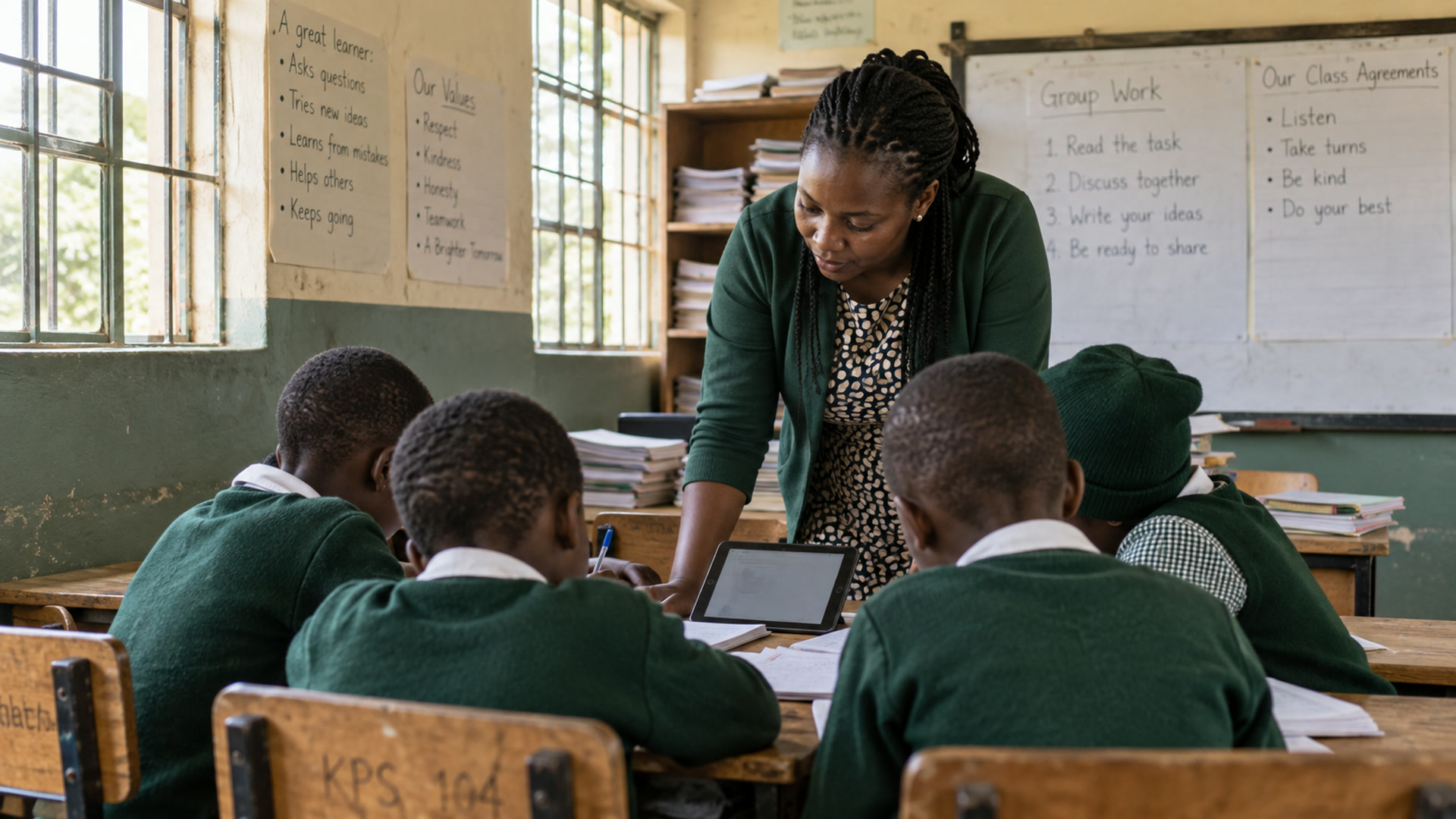
A Kenyan primary classroom during a group activity.

Getting started

What Kurasa is, and how a school or family begins.

What is Kurasa?

Kurasa is teacher-first software for CBC and CBE classrooms. It holds the lesson, the register, the evidence and the family in one record so schools are not reconstructing the week from paper. See Products or How it works.

Does Kurasa replace official CBC or CBE documents?

No. It helps you work with the curriculum. It does not rewrite it, and it is not a substitute for ministry or KICD materials. Schools remain responsible for using the official documents.

Which countries does Kurasa serve?

Kenya, Rwanda and Ghana. Classroom tools follow the competency-based curriculum in use at the school. Public school plans on this site are shown for Kenya; other markets should write to the team.

How widely is Kurasa already used?

Published figures on this site: 22,000+ self-registered users, 6,000+ teachers, 150k+ active learners, and 10M+ assessments delivered, as of September 2026. Read Impact & evidence for the conservative picture — we do not inflate unpublished metrics here.

What is Kurasa’s vision?

Two million learners in Kenya by 2028 — then Rwanda, Ghana and beyond — built on teacher-led, sustainable unit economics, not subsidised models. PSL Daily Challenge is our current path to that vision. Funds can start at Investors.

How do you keep capital efficient?

We spent early years learning what works. We now double down on validated growth — Daily Challenge and teacher partnerships — with focused spend. our story covers the five-year journey.

Can a school start with one product?

Yes. Many schools begin with Kurasa Workspace for the classroom week, or Problem Solvers League for termly assessment, and add the rest when the routine is stable. You do not have to switch everything on at once.

Which product should we start with?

If you want planning, attendance and formative assessment in the staffroom, start with Kurasa Workspace. If you want a shared termly sitting across schools, start with Problem Solvers League. If families want a short evening habit, start with PSL Daily Challenge. Get started and we will match the first step to your school.

Can one teacher start without the whole school?

A teacher can open an account and a school can start small. Schoolwide reports, roles and parent visibility need a school workspace and an appointed ICT lead. Get started, or read Kurasa Workspace.

How does a school get started?

Use Get started or talk to the team. Setup for schoolwide data is designed to take a maximum of 30 minutes. Each teacher then sets up their own account, with a school-appointed ICT lead for ongoing support.

Can we see it before we commit?

Yes. Ask for a school walkthrough via talk to the team or Get started. How it works shows how a week looks without a login.

Do teachers need training?

The classroom tools are meant to be usable the same week. The school ICT lead is the first line of support. Kurasa Academy is there when a school wants practical professional learning — not as a gate before anyone can teach.

Does it work with limited connectivity?

Classroom tools are built for ordinary school connectivity — a typical staffroom phone or a modest office line — not a data centre. If your school has long outages, tell us; some pieces can be used with less continuous internet.

What devices do teachers and parents need?

A browser on a laptop or a recent Android phone is enough for most classroom work. Parents use the web or, on some school plans, a guardian mobile app. We do not require a computer lab or iPads.

Which grades and curricula does it cover?

Workspace follows the grades the school has enrolled, against the competency-based curriculum in that country. The annual PSL Mathematics Contest is for Grades 7–9. If you are unsure which sitting or grade band matches your school, talk to the team.

What languages can we use?

This website is available in several languages. Classroom work follows the school’s language of instruction — typically English, with Kiswahili where the curriculum needs it. We do not claim every screen is translated into every language.

Do we still keep paper schemes and registers?

You can print when a school or officer still wants a paper copy. The point of Kurasa is that the live record is digital, so Sunday catch-up from exercise books is no longer the system.

Does Kurasa replace our school management system?

Kurasa is the classroom week — planning, register, evidence and family. It is not a fees, finance or admissions system. Many schools keep both.

How do we sign in?

Teachers and school staff sign in at app.kurasa.co. Use email, phone, username, or email OTP. If you belong to more than one school, pick a workspace after login.

Products

How Workspace, PSL, Daily Challenge, Home and Academy sit together.

How do the products fit together?

Kurasa Workspace is the digital school — the week’s plan, register and evidence. Problem Solvers League is the termly sitting and school picture. PSL Daily Challenge is five short questions a day for families. Kurasa Home is how progress reaches home from school records. Kurasa Academy is practical professional learning. They share the same classroom trail; they are not five logins for the same job.

What is Kurasa Workspace?

The school product for planning, assessment, attendance, reporting and parent communication. Each school has its own secure workspace. Kurasa Workspace.

What is a workspace?

One school (or education unit) on Kurasa. It keeps that school’s people, classes and records separate, and controls who can do what.

What sits inside Workspace?

lesson planning, formative assessment, attendance and digital report forms. Plan–Teach–Assess is the operating model those tools serve. aiDE sits beside the lesson plan. Headteachers see the school from the same record.

Who uses Workspace?

Teachers, headteachers, administrators and class teachers in the school. Parents and learners see what the school has authorised. Curriculum officers may be invited where a programme needs them.

Why did Kurasa rebuild as Workspace 2.0 in 2023?

We learned that teachers need individual accounts, not institutional gatekeeping. Workspace 2.0 lets teachers sign up for themselves — like WhatsApp — then join a school workspace. That change unlocked organic self-registration. Read Kurasa Workspace or our story.

What is PTA on Kurasa?

Plan–Teach–Assess — the teacher operating model inside a school workspace. It is not a parent-teacher association. A class and learning area is planned, taught as a recorded session, then formatively assessed against curriculum indicators. Plan–Teach–Assess.

How is PTA different from Workspace?

Kurasa Workspace is the school product — people, classes, plans, register, reports. Plan–Teach–Assess is how teaching is supposed to move inside that workspace: plan, teach, assess, then loop. You do not buy PTA separately.

What is aiDE?

An assistant beside the lesson plan — to help a teacher get a competent CBC-aligned draft on the page before first period. It does not replace the teacher’s judgement or the official curriculum. aiDE.

Does AI mark learners or write the curriculum?

No. aiDE helps a teacher draft a plan. Classroom assessment judgements stay with the teacher. Kurasa does not rewrite official curriculum documents.

What is Problem Solvers League?

A termly assessment programme for schools: a shared sitting, insight reports and a picture of how schools are doing. It also includes the annual PSL Mathematics Contest. Problem Solvers League.

How is PSL different from PSL Daily Challenge?

Problem Solvers League is a school programme — termly sittings, reports and (once a year) the mathematics contest. PSL Daily Challenge is the after-school programme: five questions, about eight minutes, on a parent account. Teachers recommend it as a homework alternative. A school can use one, the other, or both. They are not the same product.

Does PSL publish school rankings?

PSL gives participating schools a picture after a sitting. School lists and results are shared with written permission — not as a public children’s leaderboard. We do not publish how that picture is produced. Read Problem Solvers League.

What is PSL Daily Challenge?

An after-school programme: five short curriculum-aligned questions a day, about eight minutes, with Kadoney as the learner’s guide. Teachers recommend it as a homework alternative. PSL Daily Challenge.

How is PSL Daily Challenge different from school-based assessments?

Problem Solvers League (school) and PSL Daily Challenge (family) serve different moments. Summative asks how learners compare termly. Daily Challenge asks how a child can practise better at home. Both can feed the same classroom trail, but families download Daily Challenge directly — schools do not have to sell it.

Who is Kadoney?

Kadoney is the learner’s guide on the Mt Ovile journey — a companion for the daily five, not a teacher replacement. Meet them on the PSL Daily Challenge page.

How long does the Daily Challenge take?

About eight minutes a day. That is the whole after-school sitting — five questions, not a second homework timetable.

Can Daily Challenge replace homework?

Teachers recommend PSL Daily Challenge as a homework alternative: focused revision after school, about eight minutes. A family should still follow whatever else the school has set.

Is the Daily Five free?

Yes. The Daily Five is free for families.

Can a family use Daily Challenge if the school is not on Kurasa?

Yes. PSL Daily Challenge runs on a parent account. A teacher code is helpful when the school is on PSL, but it is not required. Kurasa Home is different: that follows the school record.

What is the PSL Mathematics Contest?

An annual sitting for Grades 7–9, hosted with a partner school. It is part of Problem Solvers League, not a separate product. Results and school lists are published only with written permission.

What is PSL Summative for?

Groups of schools — associations, faith-based bodies and other school networks — that need one view of summative results across their members. It is a programme conversation, not a teacher signup. PSL Summative.

What is Kurasa Home?

How school progress reaches the family: reports and updates from the same record teachers already keep. Kurasa Home.

How is Kurasa Home different from Daily Challenge?

Kurasa Home shows what happened at school — reports and authorised progress. PSL Daily Challenge is practice after school, on a parent account. A family can use Daily Challenge without the school’s Workspace; Home follows the school record.

What is Kurasa Academy?

Practical professional learning for teachers — short, classroom-shaped, not a separate university course. Kurasa Academy.

How are Daily Challenge or PSL questions written?

Sittings and the daily five are curriculum-aligned. We do not publish how items are written, selected or scored — that is internal to the programme. What families and schools see is the practice and the sitting, not the workshop behind them.

Who it is for

Teachers, schools, families, governments and partners.

What do teachers use Kurasa for?

To plan the week, take the register, and record formative evidence while the class is still in the room — without a second pile of paperwork. More for teachers.

What do headteachers and school leaders see?

A schoolwide picture of whether teaching happened: plans, delivery, assessment and the learners who need support. Setup is meant to take half an hour for schoolwide data. More for schools.

What do parents use?

PSL Daily Challenge is the after-school programme — about eight minutes, teacher-recommended as a homework alternative. Kurasa Home when the school shares reports from Workspace. Parents hold the Daily Challenge account; a teacher code is optional. More for parents.

Do parents need an account for Daily Challenge?

Yes. A parent or guardian creates the account and adds the learner.

What is a teacher code?

A code that links a learner to an approved PSL teacher’s group. Parents enter it when adding the learner. It is helpful, but families can still practise with a parent account alone.

Is there a parent app?

Guardian accounts live in Workspace. The guardian mobile app is included on Hakika and Imara school plans. Updates can also come by SMS or in-app, as the school has set.

Do learners get their own login?

Daily Challenge is held by the parent, who adds the learner. In a school workspace, learners see only what the school has authorised. We do not put a child’s record on a public leaderboard.

Who is the ICT lead?

The person the school appoints for ongoing Workspace support. We support that person rather than running a public ticket queue for every teacher.

What is KISEL?

Kurasa Inspection, Supervision, Evaluation & Licensing — a digital licensing and inspection system built with Ghana’s National Schools Inspectorate Authority (NaSIA) and delivered with ESDEV Foundation Africa. Read KISEL or for governments.

Is KISEL something a school can sign up for?

No. KISEL is a licensing platform for Ghana’s inspectorate. It is not a public self-serve product for a school in another country. Read the KISEL delivery plan or talk to the team.

Does the ministry or KICD endorse Kurasa?

Kurasa does not replace ministry or KICD documents. We work with ministries, inspectorates and partners on programmes — KISEL in Ghana is the public example. We do not put an unofficial endorsement on this page. Distinguished partners are listed on the partners page; programme conversations go through talk to the team.

How do education partners work with Kurasa?

Development partners, school associations, faith-based bodies and other networks that need better learner outcomes — including foundational literacy and numeracy — programmes that actually run in the school week, and data they can decide on. That is a conversation, not a self-serve signup. for education partners or talk to the team.

Is Kurasa an NGO?

Kurasa Africa builds teacher-first software. Read About. Funds looking at the work can start at Investors.

Plans and pricing

Kenya school plans, and how other markets should ask.

What are Chanzo, Hakika and Imara?

School plans in Kenya. Chanzo is the classroom core. Hakika adds assessment, reports and parent visibility. Imara includes Daily Challenge for the school plus Academy seats. Enrolment and programme are confirmed with the team. Pricing.

How is pricing handled outside Kenya?

Public tiers on this site are shown for Kenya. Contact us for pricing in Rwanda, Ghana, or other markets — talk to the team.

Why are amounts not listed as a shopping cart?

School pricing depends on enrolment, which products you start with, and whether you are on a county or association programme. We confirm a figure with you rather than publishing a number that will not match your school.

Are there discounts for small classes or annual payment?

On Workspace, small classes of five or fewer learners get 350ff, and annual payment is 7.50ff. Group pricing for several schools is via the team. See Kurasa Workspace or talk to the team.

Is Daily Challenge included in a school plan?

The Daily Five stays free for families on a parent account. For a school that wants Daily Challenge as part of its plan, that sits on Imara. Pricing.

Accounts and data

Who sees what, and how schools stay separate.

Who sees learner data?

Teachers and authorised school staff see the learners in their care. Parents see their own children through Kurasa Home or the guardian account the school has enabled. We do not put a child’s record on a public leaderboard. Privacy has the full picture.

Do you sell learner data?

No. School records stay in the school’s workspace. We do not sell children’s data. Privacy.

Who owns the school’s records?

Classroom records sit in that school’s workspace, under the school’s authority. Access is by role. If you need a copy or a close-out, Privacy and talk to the team — we do not publish hosting or security internals here.

Can a teacher belong to more than one school?

Yes. After login they pick the workspace they are working in that day. Each school’s records stay in that school’s workspace.

What happens if a teacher leaves the school?

The school’s ICT lead or administrator controls who still has access. The class record stays with the school workspace; it does not walk out with the person.

Does Workspace support CBC?

Yes. Lesson plans, formative assessment, rubrics and reports are built around competency-based curriculum. Other curricula can be supported where a school programme needs them.

Help

Where to write when the FAQ is not enough.

Where can we get help?

talk to the team or Get started. Email hello@mykurasa.com. For a live school, your ICT lead is the first stop; we support that person rather than running a public ticket queue for every teacher.

I am press or a partner looking for a pack.

Media for clippings. Press releases for statements we issued. Everything else: talk to the team.

Start this term

Bring Kurasa into your staffroom.

Workspace for your school. PSL for your county. Daily Challenge for families.