Skip to content
A Kenyan schoolgirl in uniform hikes a mountain trail at sunrise with Kadoney, a donkey in glasses and a purple hoodie, pointing toward a flagged summit.

Hiking Mt Ovile

Every learner has a mountain to climb.

With Kadoney beside them, every daily challenge becomes a step towards the summit.

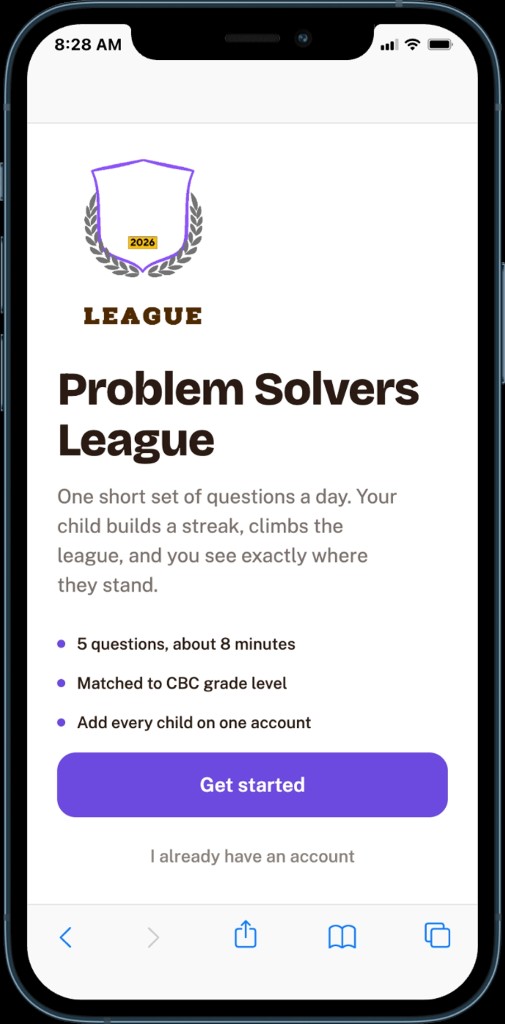
PSL Daily Challenge is the after-school programme: five short curriculum-aligned questions a day, about eight minutes. Teachers recommend it as a homework alternative — focused revision, not another booklet.

A child and parent sit at a kitchen table with a phone showing a daily challenge.

Growth path

Why PSL Daily Challenge is our growth engine.

Changing how families engage with learning.

We spent years building school-to-teacher solutions. Then we found another market that moves faster: families who want better practice for their children without the cost of tutoring.

PSL Daily Challenge does one thing well: five questions a day, about eight minutes, with gamified progression on the Mt Ovile journey — priced for Kenyan families, downloadable without a school middle person.

  • Much lower acquisition cost than school sales — families find the app through recommendations.
  • Organic growth: users invite other families; teachers recommend it as homework.
  • Daily habit drives recurring use, not one-off demos.
  • Unit economics that work at any school size — and toward two million learners in Kenya.

This is why we are all-in on Daily Challenge for 2026 and beyond. It is how we reach scale sustainably.

Who uses it

Parents, teachers and schools.

One product, three doors into the same practice habit.

For parents

  • Five minutes: quality practice without tutoring cost.
  • Progress tracking: see scores improve over time.
  • Homework alternative: teachers recommend it as structured practice.

For teachers

  • Safe to recommend to all families as homework.
  • See who practises most — useful for spotting who needs support.
  • Same classroom record as Workspace when schools are on Kurasa.

For schools

  • Imara (Gold) includes Daily Challenge access for learners.
  • Families who practise stay more engaged with school progress.
  • Hybrid model: school platform plus family app diversifies how learning reaches home.

Meet your guide

Meet Kadoney

Kadoney is more than a companion. He is the learner’s guide up Mt Ovile.

He celebrates progress, encourages another attempt after a difficult question, and reminds learners that getting something wrong is not failure. It is a signpost showing them where to practise next.

Kadoney does not carry learners to the summit. He helps them discover that they already have what it takes to reach it.

The journey begins

Base Camp: Discover your starting point

Every learner begins at Base Camp with a simple daily challenge: five questions designed to take only a few focused minutes.

There is no overwhelming test paper and no pressure to know everything at once. Each answer gives PSL a clearer picture of what the learner understands and where they may need more support.

Five questions. About eight minutes. One useful learning signal. A stronger habit every day.

The Daily Five is free. Teachers recommend it as homework.

See the path clearly

The Learning Map: Know your strengths and weak spots

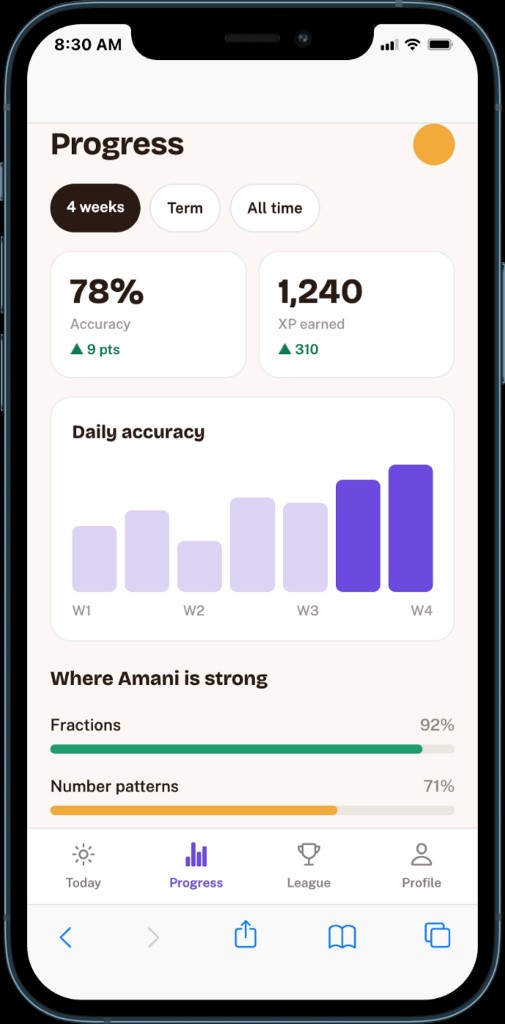
As the learner continues climbing, their answers begin to form a learning map.

The map reveals the topics they understand confidently, the skills that are still developing, and the concepts that may need another explanation or more practice.

Instead of saying, “I am not good at this subject,” learners can begin to say:

  • “I understand this topic.”
  • “I need more practice here.”
  • “I am improving.”
  • “I know what to work on next.”

That change matters. When learners can see their progress clearly, uncertainty becomes direction.

Inside the app

The climb, on a phone.

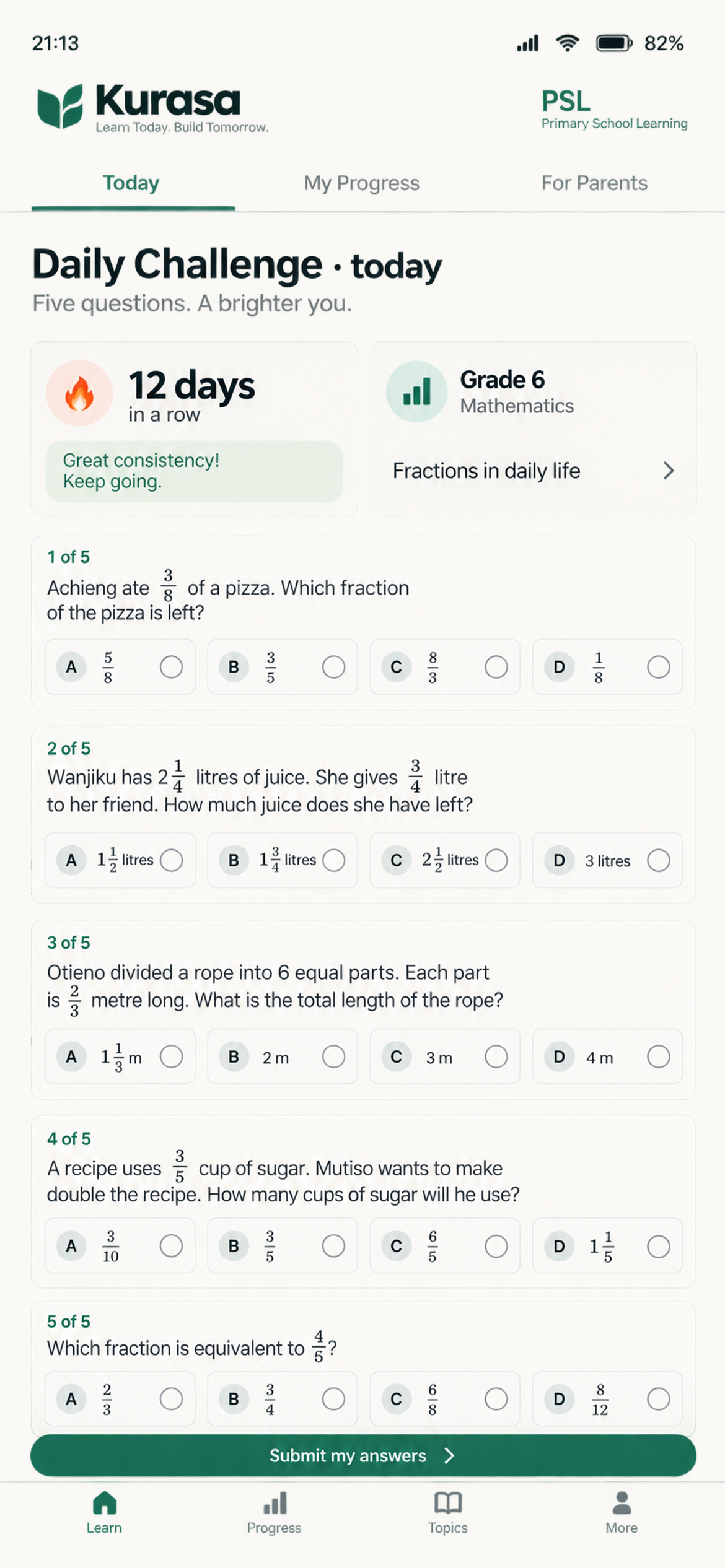
Mobile screen with five CBC questions and a streak of days practised.
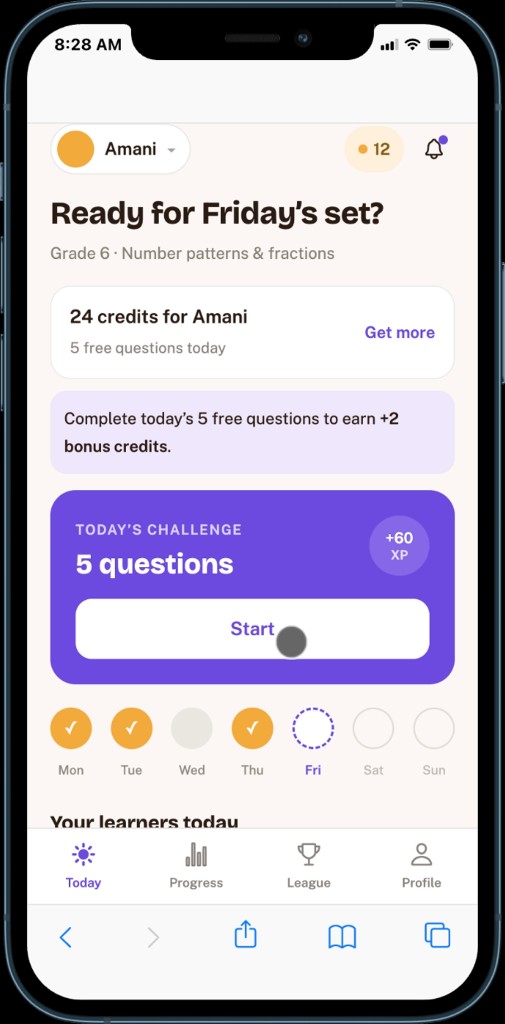
PSL Daily Challenge home: Friday’s set of five questions for Amani in Grade 6.

Base Camp

Today’s five questions

Every climb starts here: five short questions, a few focused minutes, no overwhelming test paper.

Build strength daily

The Trail: Practise before the pressure arrives

Mountains are not climbed in one giant step, and exam readiness is not built in one night.

PSL turns preparation into a steady daily rhythm. Learners meet new questions, revisit developing skills, and practise recalling what they know while there is still time to improve.

Kadoney keeps the journey encouraging, while progress markers help learners see that every completed challenge moves them forward.

Daily practice helps learners build:

  • Stronger recall
  • Better question-reading habits
  • Confidence with unfamiliar problems
  • Awareness of topics that need attention
  • The discipline to complete focused work consistently

Turn mistakes into directions

A wrong answer is not the end of the trail

On Mt Ovile, mistakes are useful.

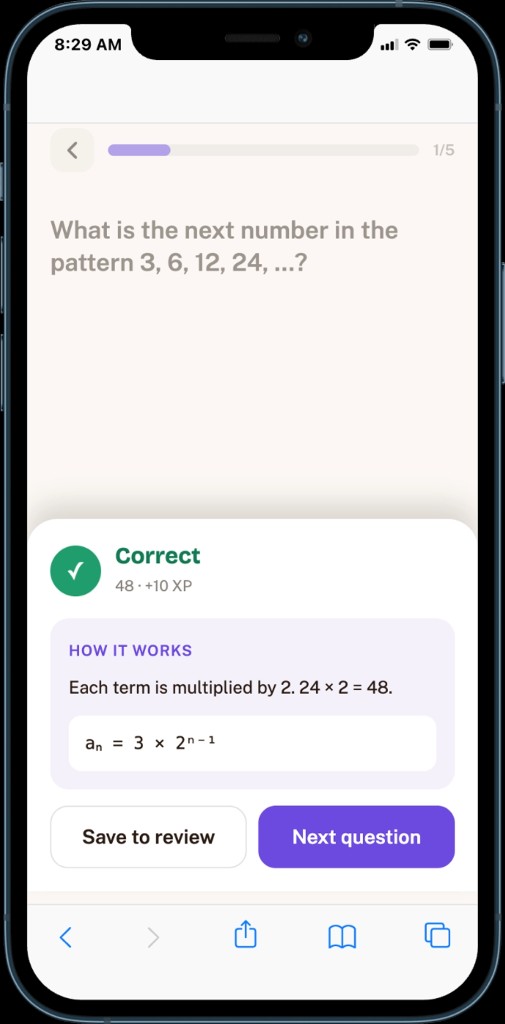
A missed question helps identify a concept that needs attention. A repeated difficulty reveals a pattern. An improving result shows that practice is working.

PSL helps learners look beyond the score and ask a better question:

What can this result teach me about my next step?

That makes weaknesses less frightening and strengths more meaningful.

Support along the way

Learners climb, but they do not climb alone

A parent checks a progress update on a phone after the child has gone to bed.

Parents can follow the learner’s progress and recognise where encouragement or additional support may be helpful.

When a learner connects with an approved teacher using a teacher code, the teacher can better understand the learner’s progress and guide them towards the right areas of practice.

The learner remains at the centre of the journey, supported by people who can see where they are doing well and where they may need a hand.

After school

Eight minutes. Teacher-recommended homework.

PSL Daily Challenge is an after-school programme: five questions, about eight minutes a day. Teachers recommend it as a homework alternative — the revision they asked for, not a second timetable.

Families tell that evening in different ways: a streak before supper, KJSEA practice with a friend, a boy telling his parent the teacher said this is the homework. The three clips below are interchangeable — any one of them is the same eight-minute habit.

A parent asks about homework. The boy is doing PSL Daily Challenge — the teacher said this is the revision. Watch on YouTube
Usipoteze streak ya PSL Daily Challenge. Watch on YouTube
Practise KJSEA na PSL Daily Challenge. Watch on YouTube

Before you start

Straight answers for families.

What is PSL Daily Challenge?

An after-school programme: five short curriculum-aligned questions a day, about eight minutes, with Kadoney as the learner’s guide. Teachers recommend it as a homework alternative. PSL Daily Challenge.

How long does the Daily Challenge take?

About eight minutes a day. That is the whole after-school sitting — five questions, not a second homework timetable.

Can Daily Challenge replace homework?

Teachers recommend PSL Daily Challenge as a homework alternative: focused revision after school, about eight minutes. A family should still follow whatever else the school has set.

Is the Daily Five free?

Yes. The Daily Five is free for families.

Do parents need an account for Daily Challenge?

Yes. A parent or guardian creates the account and adds the learner.

What is a teacher code?

A code that links a learner to an approved PSL teacher’s group. Parents enter it when adding the learner. It is helpful, but families can still practise with a parent account alone.

How is PSL different from PSL Daily Challenge?

Problem Solvers League is a school programme — termly sittings, reports and (once a year) the mathematics contest. PSL Daily Challenge is the after-school programme: five questions, about eight minutes, on a parent account. Teachers recommend it as a homework alternative. A school can use one, the other, or both. They are not the same product.

More questions

Exam readiness

The Summit: Walk into the exam room ready

By the time national standardized exams arrive, the questions should not feel like the beginning of the journey.

The learner has already spent time practising, noticing patterns, correcting misunderstandings, and becoming comfortable with answering questions independently.

PSL does not promise a shortcut or a perfect score. It helps learners build something more dependable: preparation grounded in daily effort and a clear understanding of their own learning.

At the summit, success is more than a result.

  • It is the confidence to begin.
  • The resilience to continue.
  • The self-awareness to improve.
  • And the belief that the next challenge can be solved.

Start today

Your climb starts with five questions

Meet Kadoney at Base Camp and take today’s first step up Mt Ovile.

After school. Five questions. About eight minutes. Teacher-recommended homework.