Mpya
PSL Daily Challenge
After school, eight minutes a day. Teachers recommend it as a homework alternative — five questions, not another booklet.
A learner answers 5 questions each day. How many questions in 7 days?
Everything you need to teach, assess and manage.
For stronger learners, schools and communities.
Mpya
After school, eight minutes a day. Teachers recommend it as a homework alternative — five questions, not another booklet.
A learner answers 5 questions each day. How many questions in 7 days?
Teacher resource
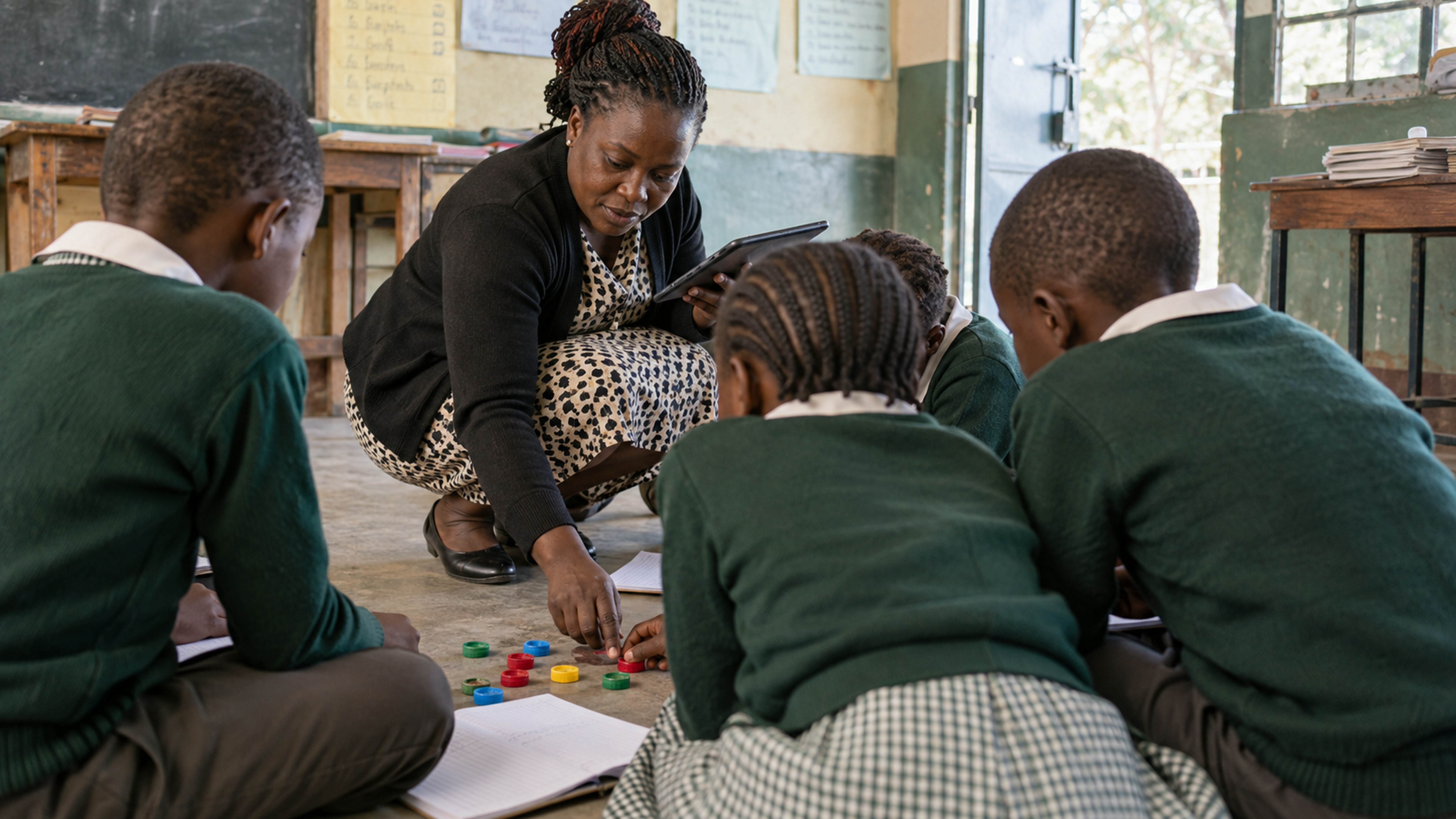
Early-years CBC already asked for play. The June 2024 original wrapped that in International Day of Play. This page drops the calendar. Play is useful when it carries a competency you can see — sorting, counting, telling, sharing — and a teacher who writes what she saw before the mat is stacked.
Teacher resource, rewritten from the mykurasa.com guide for this site in September 2026. It is not a 60 Decibels percentage. Where a 60dB piece already covers the same weekday job, that piece is a see-also — the figures stay on that ledger.
A game with a rule the learner can say. Materials the school already has — bottle tops, string, a yard. Talk that is part of the task, not a lecture after it. Observation against a strand, not a party. Older grades can still use a game when it earns the period. They should not fake “play-based” to decorate a note.
Formative assessment in the early years is often a note, not a quiz. Workspace can hold that note against an indicator. It does not replace the mat. Foundational literacy and numeracy are why the game exists — the floor, not a gadget list.
The celebration kicker. Stock paragraphs about holistic development. A claim that Kurasa invented play. Daily Challenge is five questions after supper for older grades. It is not a play session.

Topics Teacher resources
Tags CBC Kenya · Formative assessment · Lesson planning
On the mat
Formative assessment for the note. The CBC guide for the week. Foundational literacy for the floor.