
Workspace · Attendance
Keep attendance visible and follow up consistently
Kurasa helps schools record attendance and bring it into the school’s working picture of learner participation.
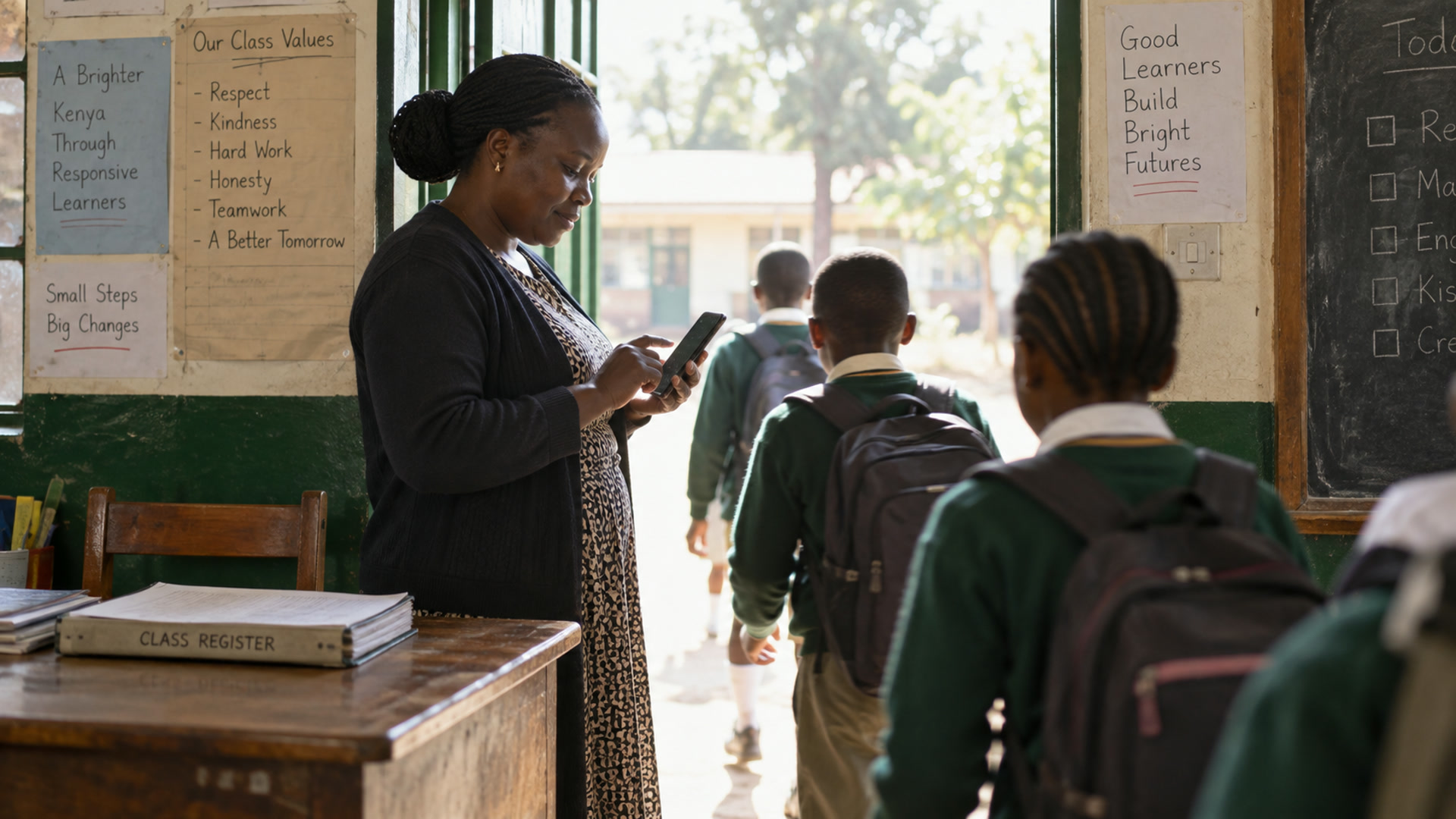
Attendance
The register, then the follow-up
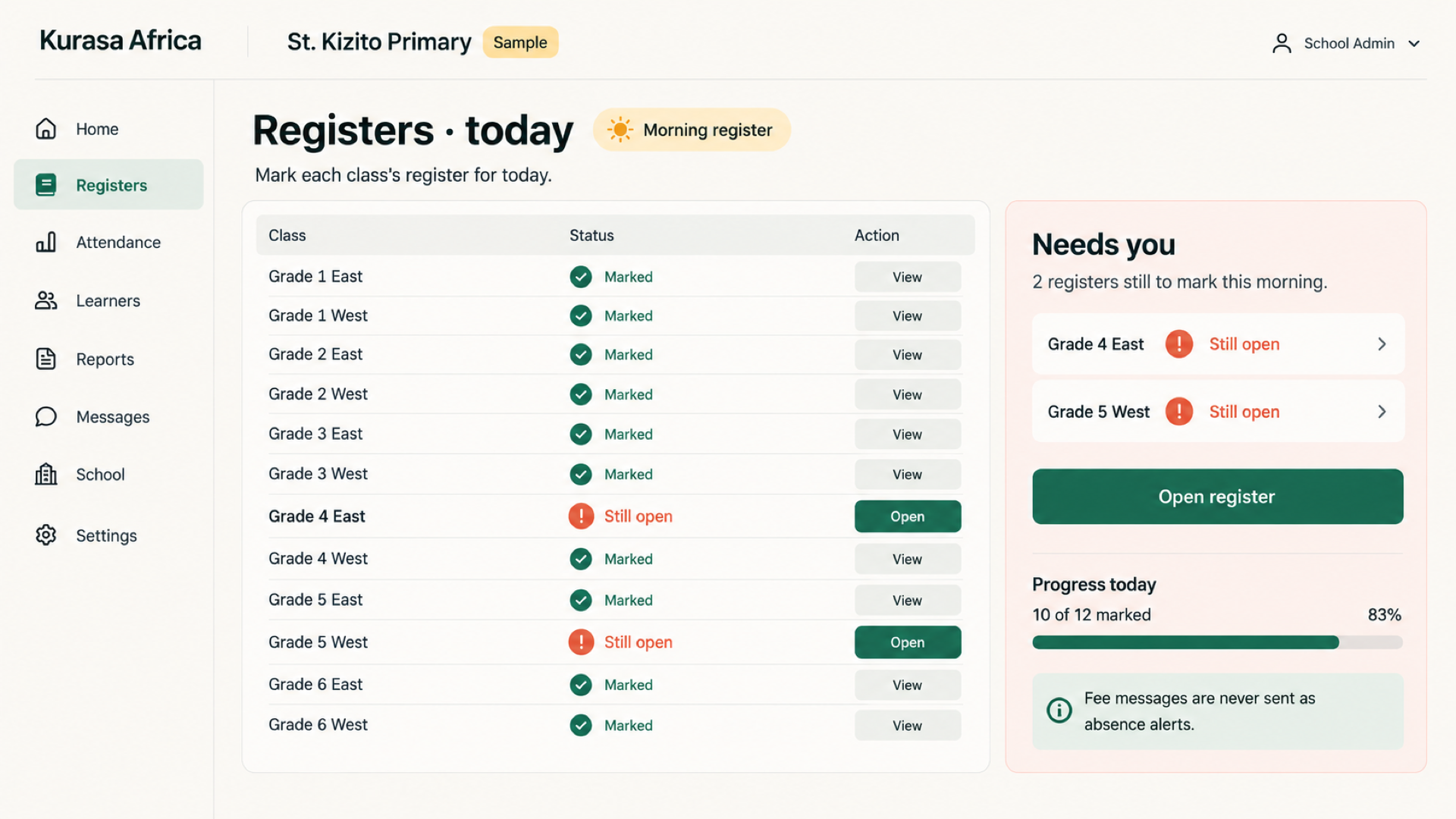
Teachers mark the class. Leaders see which registers are still open. Follow-up for repeated absence, staff clock-in and gate arrivals are in the design and not available yet.
Class and school
Present, absent and late sit on the class register and roll up to the school on the same day.
Who to follow up
The designed list is for learners the school still needs to reach. Fee messages are not sent as absence alerts.
Staff clock-in
Teachers are designed to clock in from the phone or a gate tablet. Leaders would see who is in, late, away or on leave.
Record and review
Agree when each class register should be completed and who reviews outstanding entries. Check the date and class before recording attendance, then distinguish an absent learner from a register that has not been marked. A consistent daily routine makes later review more useful.
Notice patterns
Review repeated absence or missing entries over a defined period, alongside the information held by the school. Check for recording errors before starting follow-up. Staff should consider the learner's circumstances and agree an appropriate response rather than treating a pattern as a conclusion on its own.
Communicate with families
Use the school's agreed contact route to clarify an absence and discuss support with an authorized adult. Keep the message relevant to attendance and avoid including unrelated personal information. Confirm which communication and follow-up tools are available before relying on a particular notification or reminder.
Build a consistent daily register
Agree when attendance is recorded, who maintains each class register and how corrections are checked. Consistency helps the school interpret a week’s participation without confusing a missing entry with an absent learner. Keep the process simple enough for staff to complete alongside the rest of the school day.
Follow up with context
Repeated absence is a reason to ask questions and offer appropriate support. School teams should review dates, speak with the relevant staff and use established family contact procedures. Link attendance conversations to learning support where helpful, while avoiding conclusions about a learner based on the register alone.
The problem
Paper registers go missing, arrive late, or never join assessment data. Families ask about absence while the office is still chasing yesterday’s book.
At the door
Mark the class as learners enter. The school picture updates without a second pass through every classroom notebook.
From the classroom record
Class and school
Teachers take the class; leaders see the whole school the same day.
Parent visibility
Absence can reach home through the same family channels as progress.
One trail with the lesson
Attendance sits beside the plan and formative work — not in a separate silo.
Related
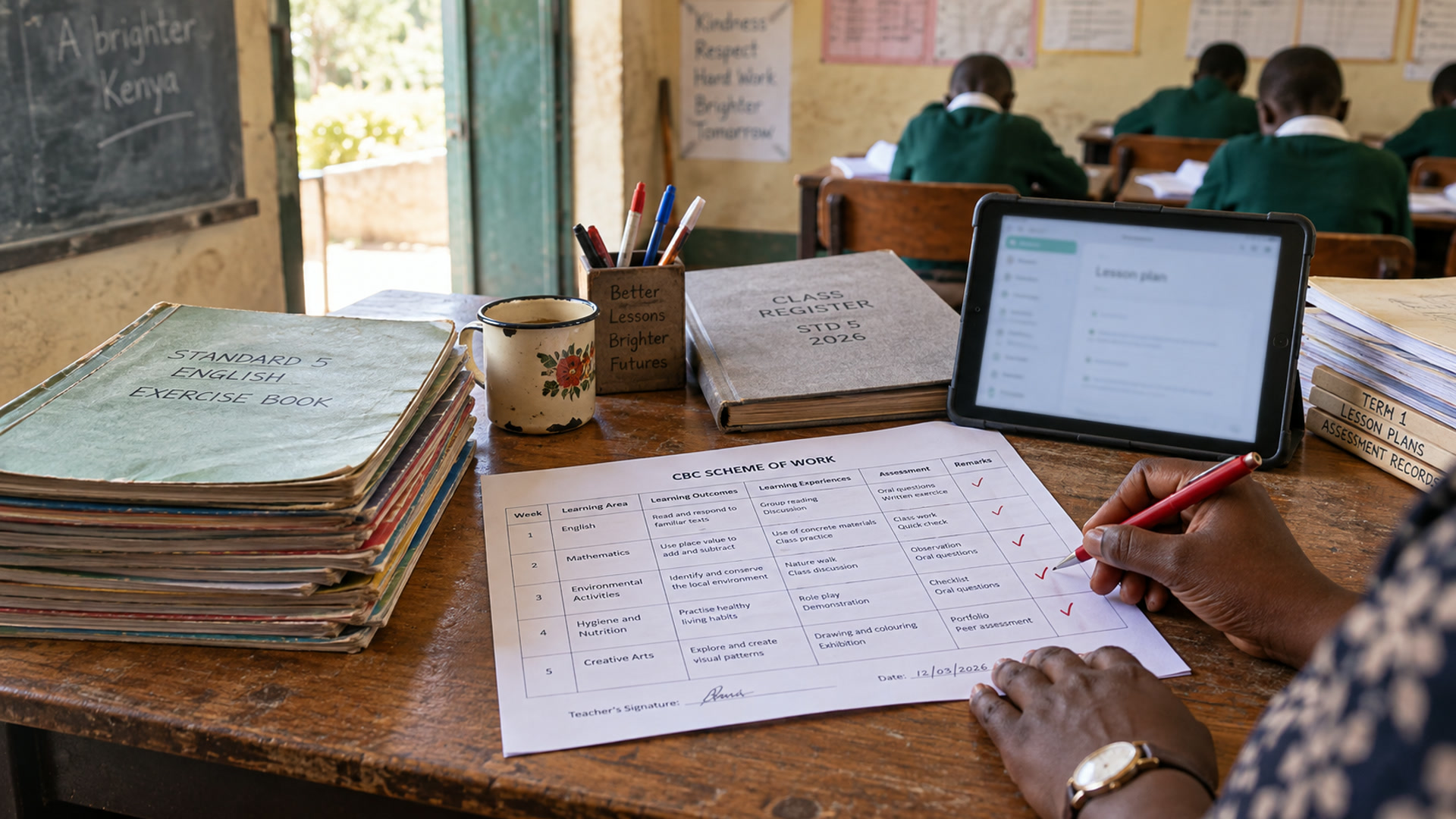
Kurasa Workspace
The digital school: teachers plan and assess, leaders see the whole school.
Explore
Attendance & retention
Know who is missing, and act early.
Explore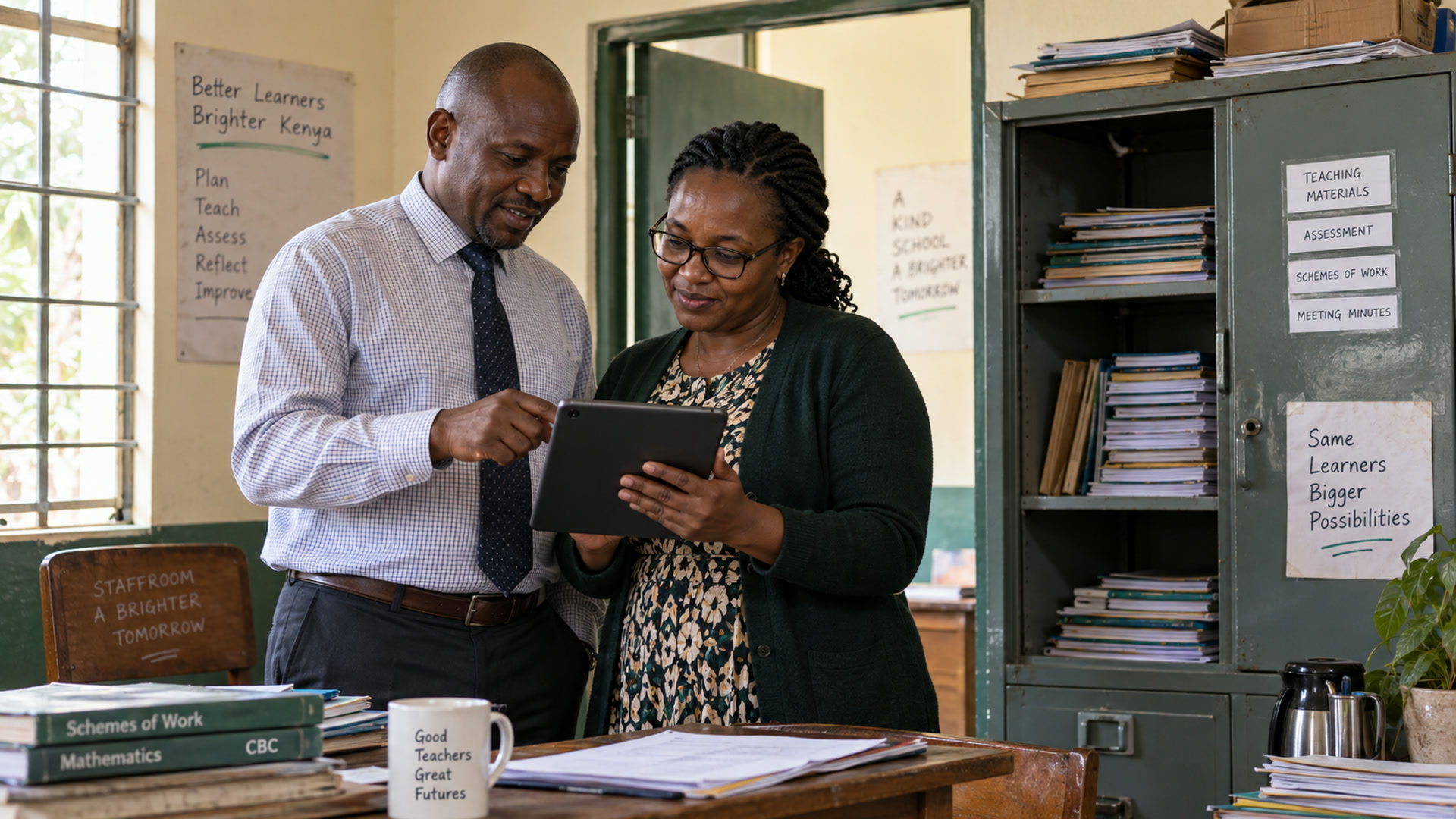
Learner records
Profiles, learning history and school records in one place.
Explore
Insights & reports
Learner, class and school reports from the evidence teachers record.
Explore