Governments · Learning assessment
Turn assessment evidence into a clearer next step
SCOPE, within Kurasa Civic, turns common assessment records into learning-outcomes intelligence for education authorities.
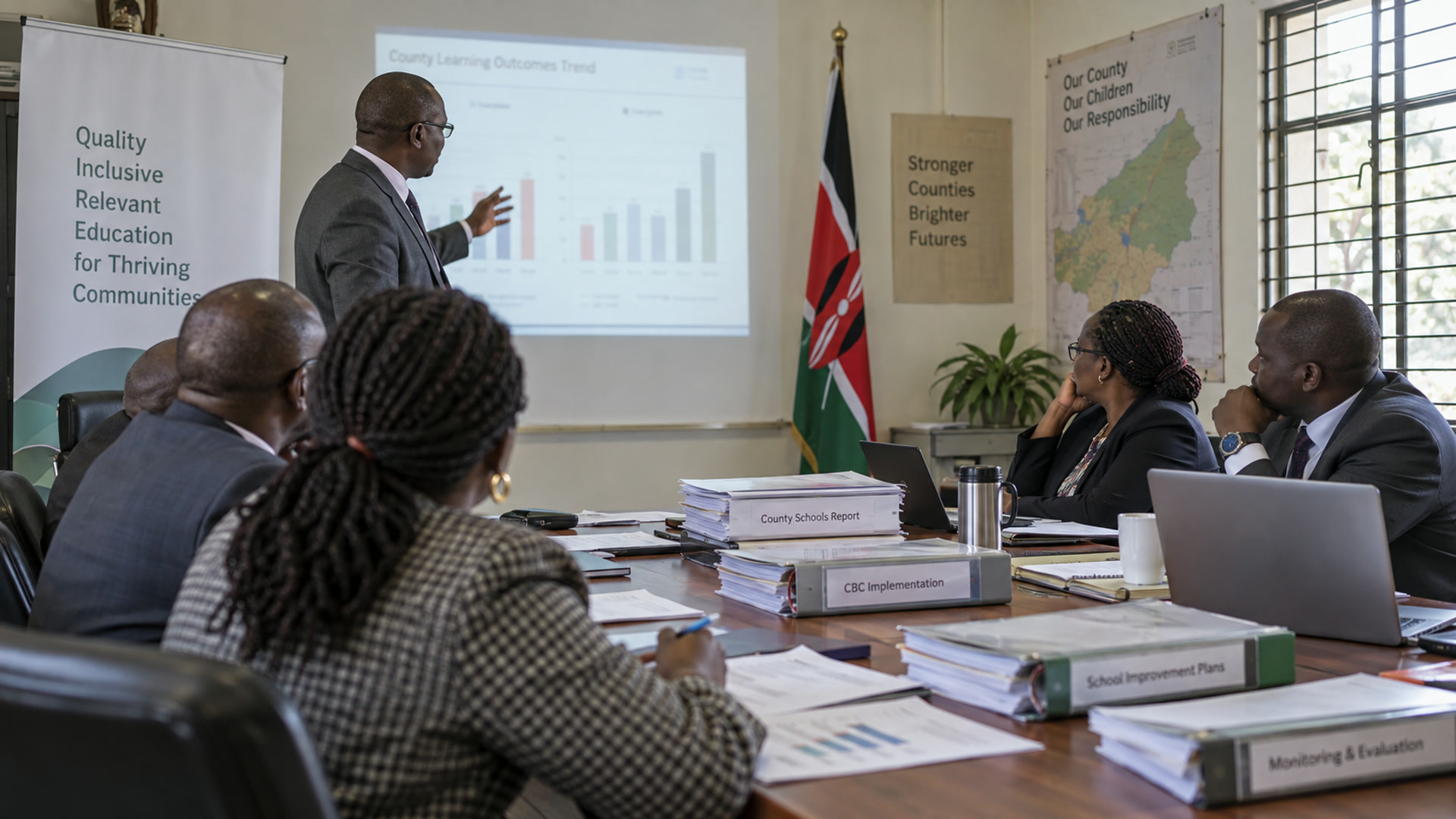
Use one assessment cycle to decide where to follow up
For example, if some districts report lower mathematics mastery, first check that schools used comparable tasks, which grades took part and how many results are missing. Review the competency breakdown with education officers and school leaders. Agree what teaching support to offer and what to check in the next cycle.
Set the assessment frame
Begin with the skills being assessed, the learner groups involved and the decisions the results should support. Agree the assessment period and who will prepare, collect and review the records. These choices help the team interpret coverage and identify where the evidence is incomplete or needs further checking.
Plan what happens after results
Reports are most useful when an education team has a process for responding. Decide who will discuss findings with schools, how teachers can use the evidence and when progress will be reviewed again. Contact Kurasa to discuss supported assessment workflows, reporting levels and the scope of implementation support.
Related
Kurasa Civic
Education intelligence for governments, with SCOPE for learning outcomes and KISEL for institutional oversight.
Explore
SCOPE
Assessment and learning-outcomes intelligence within Kurasa Civic: learner mastery, jurisdiction comparisons and progress over time.
Explore
Assessment at scale
Assess many learners consistently, every term.
Explore
Problem Solvers League
Termly assessments, school rankings and the annual Mathematics Contest.
Explore
System data
Dashboards, reporting and governance.
Explore