
Guides · Planning
How to build a CBC scheme of work
A scheme of work turns a term of the curriculum design into weekly lessons you can teach, check and adjust.

A scheme of work is the teacher’s term plan for one learning area and class. It shows what will be taught each week, which learning outcomes the lessons serve and how learners will be assessed. Lesson plans, records of work covered and assessment records all grow out of it, so a scheme that is clear and realistic saves effort for the rest of the term.
Schools and education offices may require their own format. The columns below are the ones most CBC schemes include; use the format you are asked to use and adapt the method to it.
- Week and lesson: the weeks of the term and the number of lessons in each.
- Strand and sub-strand: the part of the curriculum design the lessons cover.
- Specific learning outcomes: what learners should be able to do by the end of the sub-strand.
- Key inquiry questions: open questions that guide learning and discussion.
- Learning experiences: the activities learners will do, written as what learners do.
- Learning resources: the materials, tools and spaces needed.
- Assessment methods: how you will check learning, such as observation, oral questions, practical tasks or written work.
- Reflection: a place to note what worked and what to change.
Build it in five steps
- Start from the curriculum design for the learning area and grade, and list the strands and sub-strands for the term.
- Count the real teaching weeks in the school calendar. Take out public holidays, assessments, trips and other interruptions before you allocate lessons.
- Share the sub-strands across the weeks in a sensible order, giving more lessons to the outcomes that need practice.
- Write the outcomes, inquiry questions, experiences, resources and assessment for each week.
- Check the whole term at a glance: is every sub-strand covered, and is there time to revise before assessments?
Common problems
- Planning the full syllabus into too few weeks, so the last strands are rushed.
- Writing learning experiences that describe the teacher’s activity instead of what learners do.
- Writing assessment as a single word, such as “test”, instead of the method and the evidence you expect.
- Leaving the reflection column empty, so the next term starts from the same plan.
Keep it current
Treat the scheme as a working document. When a week changes, update the scheme and note why. Record what was actually covered and compare it with the plan at the end of each month. School leaders can use that comparison for a short syllabus-coverage conversation without asking teachers for another report.
From scheme to lesson plan
Each week of the scheme becomes one or more lesson plans. Carry the outcome, inquiry question and assessment method across, then add the timings, steps and grouping for the lesson itself. If a lesson plan and the scheme disagree, change one so they match.
Using Kurasa Workspace
In Kurasa Workspace, teachers organise schemes of work and lesson plans and keep each lesson connected to the scheme it belongs to. Teachers adapt every plan to their learners, curriculum and classroom.
Relacionado
CBC lesson plans
The parts of a lesson plan, a lesson flow and reflection.
Explorar
Syllabus coverage tracking
A monthly routine for comparing the plan with what was taught.
Explorar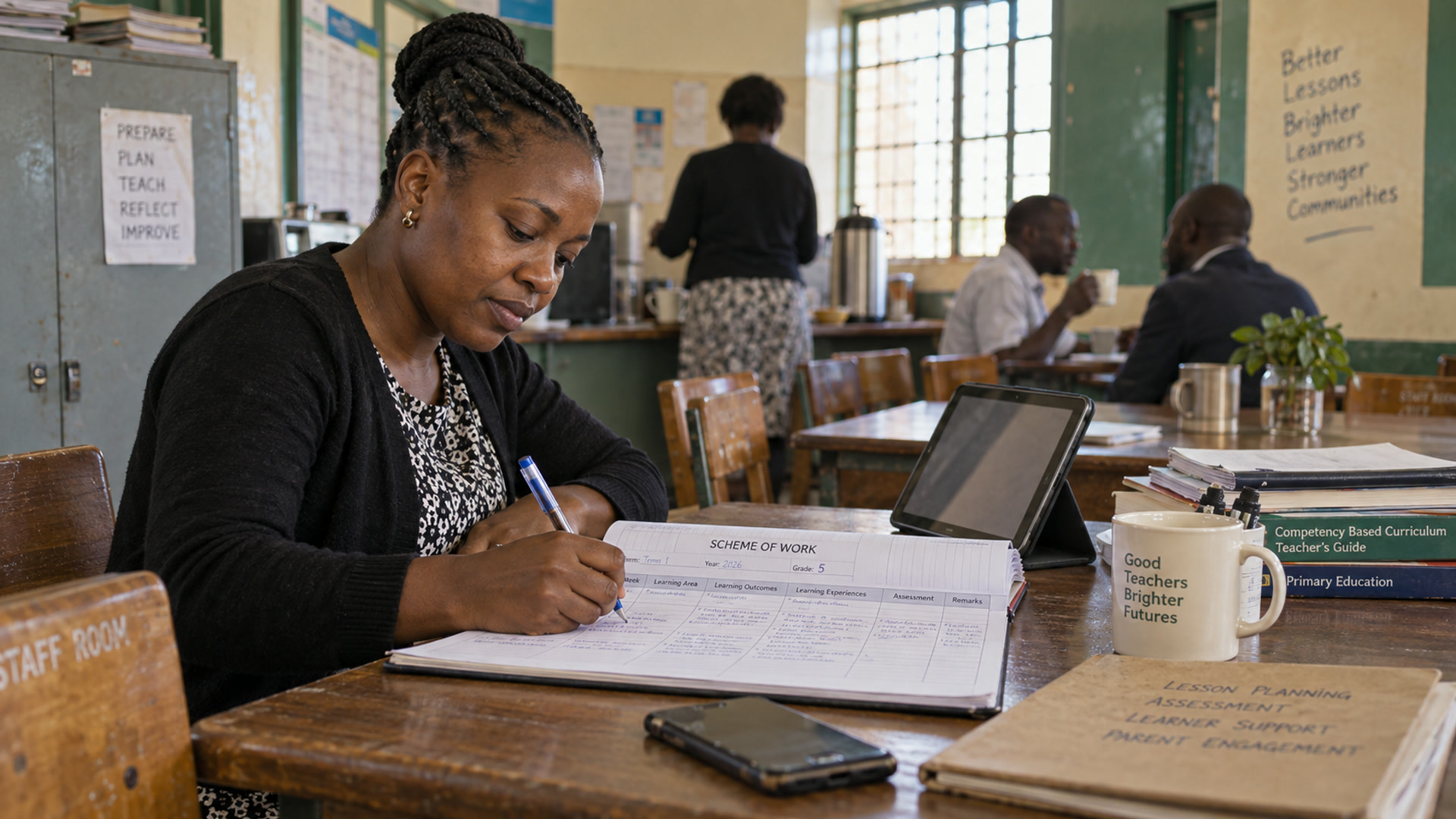
Enseñanza y planificación
Esquemas de trabajo, lecciones y preparación del aula, listos antes del primer período.
Explorar
Docentes
Planificación del aula, evaluación y apoyo al profesorado.
Explorar