What has to be in the room
A headteacher should be able to look at lesson-plan quality, syllabus coverage, and how learners did in formative and summative work without reconstructing the week from paper. Stanley Kago said that on camera at Marion Schools in 2023. The useful part is not the sporting metaphor. It is that the staff meeting and the parent meeting start in the same place: the grey areas.
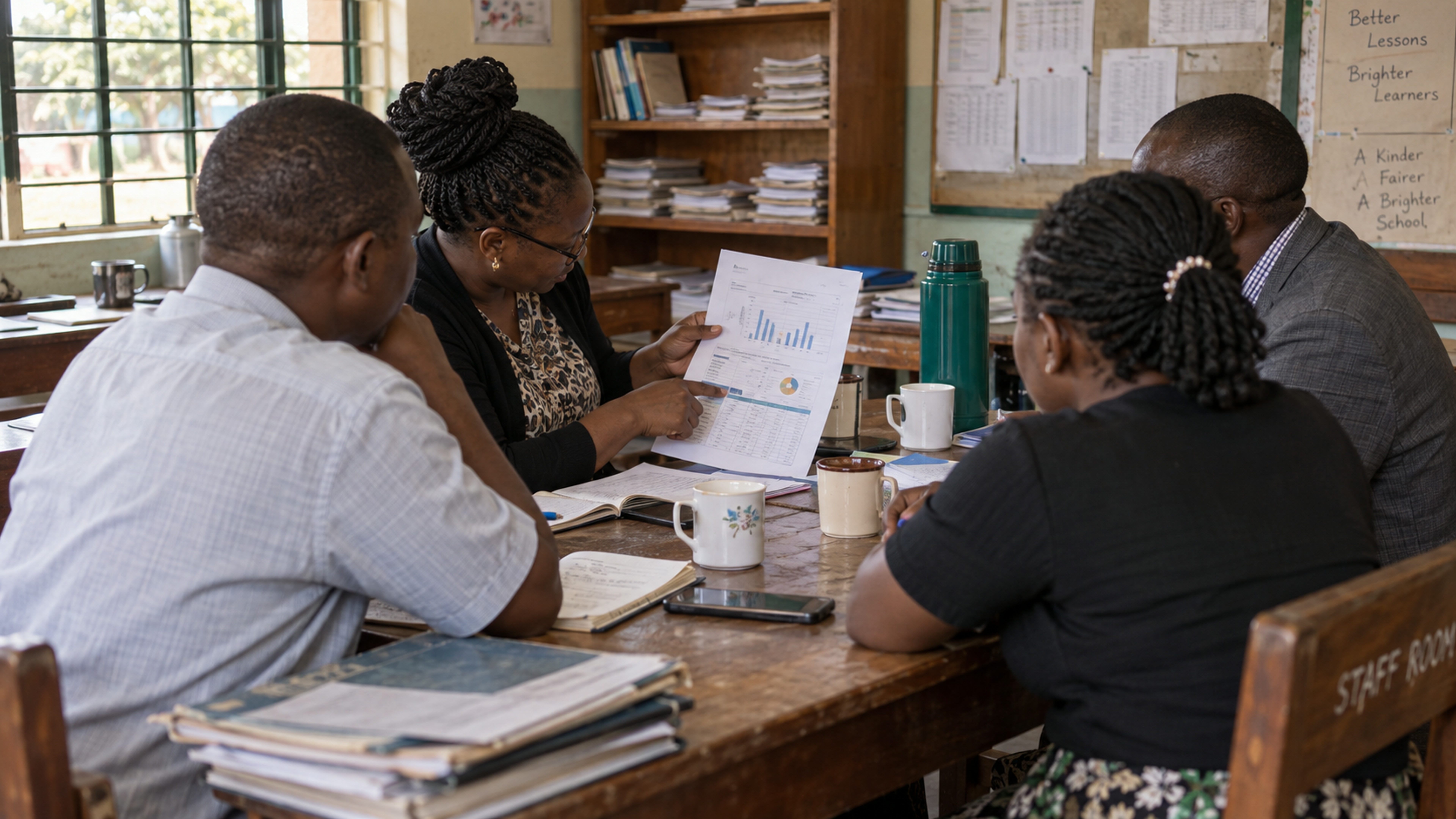
PSL insight reports are built for that table. A sitting is scored. Strands show. A school can see where the paper bit and where it did not. The next scheme can move. That is a different artefact from a trophy photograph. It is also a different artefact from a national dashboard. The school is still the teacher.
A named sitting, used as a diagnostic
The Acacia Crest Edition, 2026, put twelve schools and 207 scored scripts on the public record. The average was 37.3 percent. That number is not a scandal and it is not a celebration. It is what a reasoning paper does when you publish it. The write-up on this site is explicit: celebrate the learners who stretched, and send every participating school home with something a teacher can reteach next week. Strand diagnosis and question-level review are the staff-meeting objects. Ranking is the Saturday object.
The week after
Reteach is a Monday job. The Friday meeting names the strand. The teacher opens the next lesson in Workspace with those indicators already in view. Formative marks in the following days are how you know whether the reteach landed. If that loop requires a data officer, it will not survive a public-school week. If it requires the chair who authorised the school, it is no longer a staff meeting.
KEPSHA’s pipe gets the school into the sitting. The sitting gets a picture onto the table. The teacher still has to change the group. Shule ni Mwalimu is that last sentence, repeated until it is boring.