Guides · Planning
How to write a CBC lesson plan
A lesson plan connects an outcome, the activities that build it and the evidence that shows it was learned.
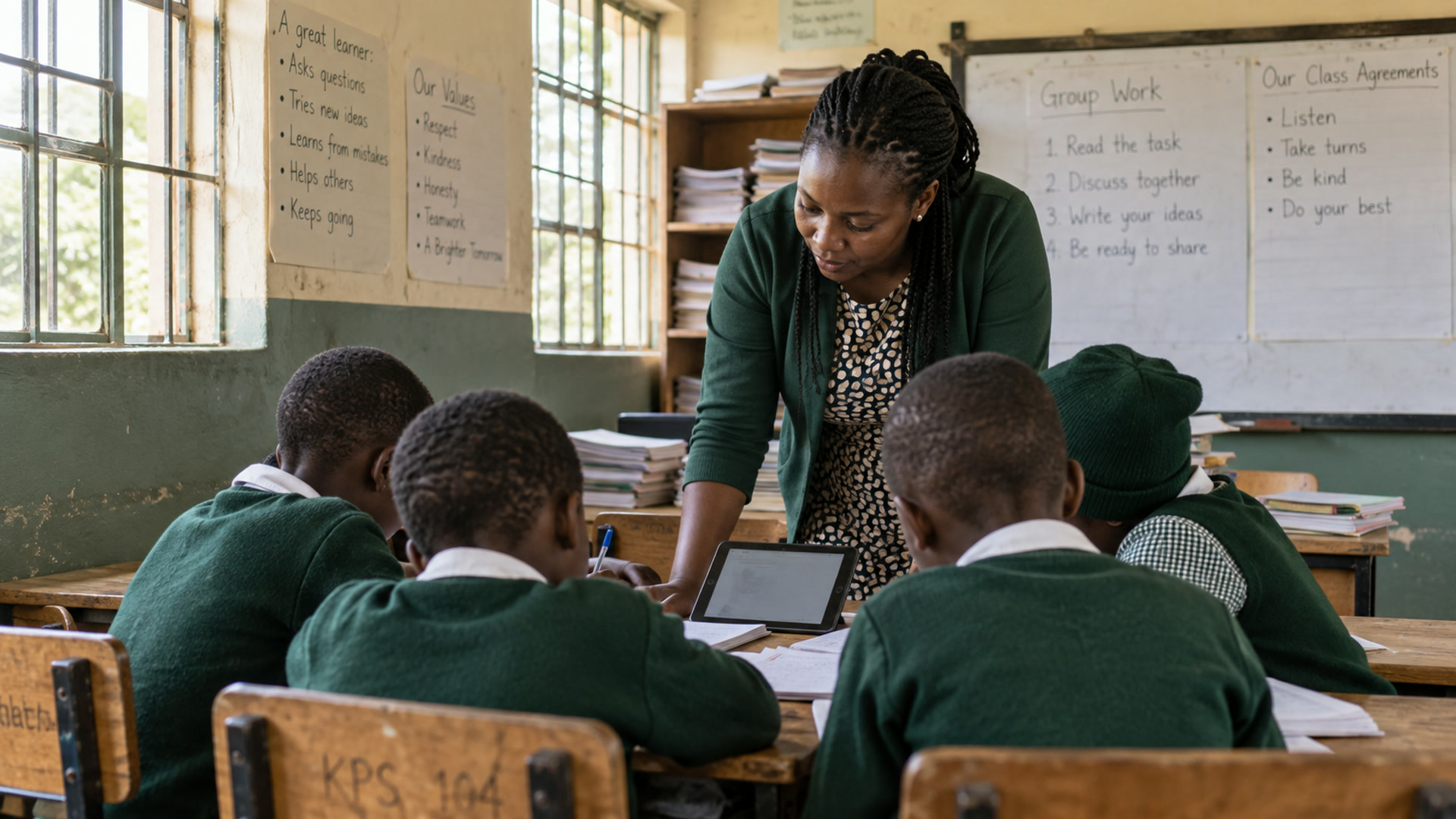
A lesson plan is the teacher’s working plan for one lesson. It starts from the scheme of work and says what learners will do, how long each part takes and how you will know what they learned. Formats vary between schools and teacher-training institutions, but a CBC lesson plan usually covers the parts below.
- Administrative details: school, date, class, subject or learning area, time and roll.
- Curriculum reference: the strand and sub-strand from the scheme of work.
- Specific learning outcomes: measurable statements of what learners will be able to do.
- Key inquiry question: an open question that guides the lesson.
- Core competencies and values: the competencies the lesson develops, such as communication and collaboration, critical thinking and problem solving, or digital literacy, and the values it promotes.
- Pertinent and contemporary issues: themes such as health, environment or citizenship, where they fit naturally.
- Learning resources: what you and the learners will use.
- Organisation of learning: an introduction, the lesson development and a conclusion.
- Extended activities: tasks that let learners apply the idea beyond the lesson.
- Reflection: what worked, what did not and what to change.
A lesson flow that works
- Introduction: connect to what learners already know and state the outcome in plain words.
- Development: give learners something to do, in pairs or groups where it helps, and move around the class to observe.
- Checks for understanding: build in two or three quick questions or tasks so you know what to reteach.
- Conclusion: ask learners to summarise, apply or explain one idea before you close.
Plan the evidence
Decide before the lesson what a learner will say, do or produce if they have understood. Use a short observation note, an oral question, a practical task or a short written exercise, and record only what you will use. Performance levels such as exceeding, meeting, approaching and below expectation are judged from evidence collected over time, not from a single lesson.
After the lesson
Spend two minutes on reflection: which learners needed more help, which question or task worked and what you will change next time. Use those notes when you plan the next lesson in the scheme.
Use the format your school requires
Teacher-training institutions, schools and education offices each use their own lesson-plan formats. Follow the format you are asked to use, and use this guide to check that the thinking behind each part is there.
Using Kurasa Workspace
Kurasa Workspace helps teachers prepare lesson plans connected to their scheme of work. Where aiDE is enabled for your role, it can help draft an activity around a clear objective. Teachers check the content, curriculum fit, examples and timing before teaching from it.
Kuhusiana
CBC schemes of work
Columns, steps and common problems for a term plan.
Chunguza
Syllabus coverage tracking
A monthly routine for comparing the plan with what was taught.
Chunguza
aiDE · Kwa walimu
Panga, unda, tathmini na ujibu, na mwalimu anayehusika.
Chunguza
Walimu
Upangaji wa darasa, tathmini na usaidizi kwa walimu.
Chunguza