Aller au contenu
Commencer

Teacher resource

CBC for teachers: competencies, then the week you can actually run

CBC asked Kenyan classrooms to develop competencies — thinking, making, collaborating, belonging — not only to pass a terminal exam. The week still has to fit in a real period, on a real connection, with a scheme that survives first bell. This is the pillar the thinner explainers 301 into.

Teacher resource, rewritten from the mykurasa.com guide for this site in September 2026. It is not a 60 Decibels percentage. Where a 60dB piece already covers the same weekday job, that piece is a see-also — the figures stay on that ledger.

An adult teacher at a staffroom table with a scheme and a tablet, early light.

Principles that survive a rewrite

Holistic, not only cognitive. Inclusive, not a single pace. The learner does some of the work. Projects when the world is the test. Continuous assessment instead of a single gate. Progress when the competency is met, not only when the calendar says so.

Practical order

Align the lesson to a stated competency. Let learners work together when the task needs it. Use a device for the record, not as a treat. Give feedback while it can still change the next period. Differentiate without running a private school inside a public one.

Kurasa’s place

The software does not replace KICD documents. It holds the living week: plans, registers, formative evidence, a parent picture. The 2023 “CBC landscape” and 2022 ABCs posts 301 here. When government language prefers CBE, date the change. Do not silently restyle history.
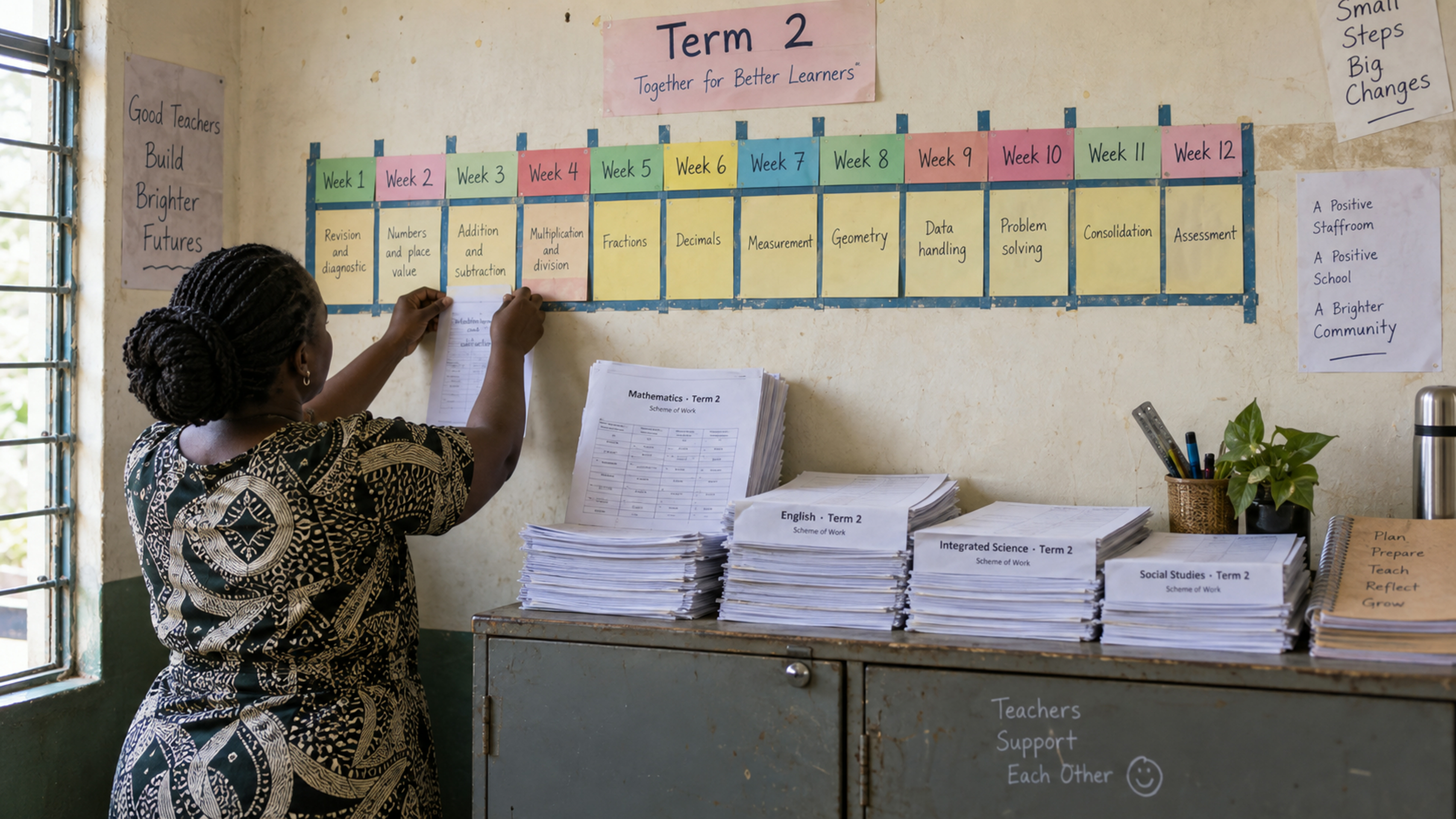
A handmade term planner and printed schemes on a staffroom cabinet.
A scheme and a tablet. Official documents stay official. The software is a page.

The week

Start with the competency. Finish with evidence.

Lesson planning and formative assessment are the two product pages that carry this guide.