Governments · System data
Build reporting around decisions
Plan education dashboards, reports and data governance with Kurasa.
Follow the administrative hierarchy
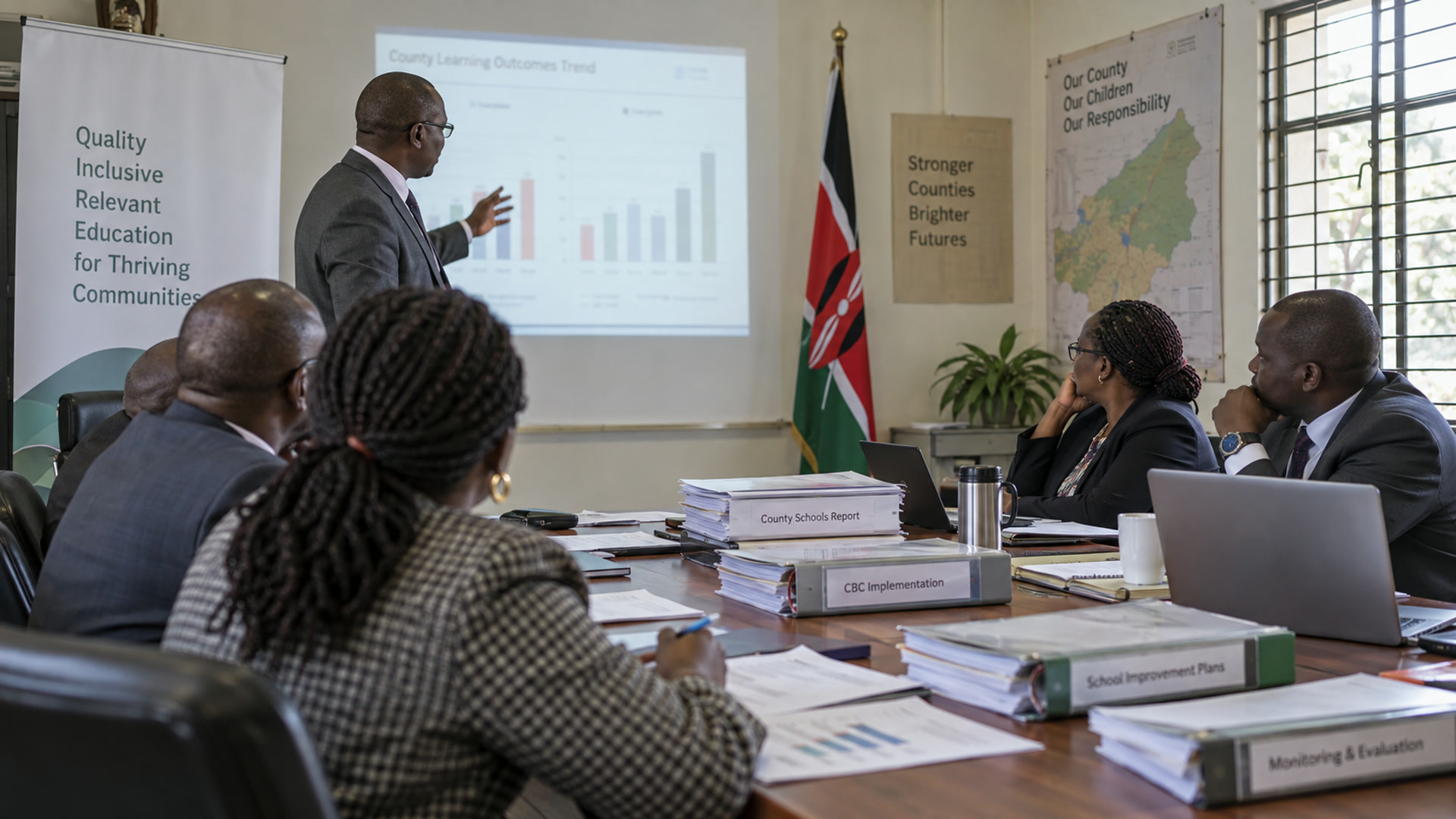
Reports should follow the authority’s own structure, for example school, zone, sub-county and county in Kenya, or the equivalent levels in another system. Agree which levels see which information and who can drill down to individual schools, and record those permissions before dashboards are built.
Agree the source of truth for each record
National education management information systems, such as Kenya’s KEMIS, typically hold administrative records for schools, learners and teachers. Classroom records, such as lesson plans, attendance and assessment results, are created daily in schools. Decide which system holds which record, how schools and learners are matched across systems and how corrections flow back. Confirm any connection requirement early, because it shapes scope and timeline.
Define the reporting question first
Identify who will use a report and what action it should inform. Then agree the schools, learner groups, reporting period and sources needed to answer the question. This keeps data requests focused and helps teams avoid collecting information without a clear purpose or a person responsible for using it.
Keep quality and governance visible
A reporting plan should address missing records, inconsistent definitions and changes to participating sites. Assign owners for corrections and explain limitations alongside results. Discuss role permissions, retention and any required connections with Kurasa, together with the authority’s legal, security and procurement requirements for the proposed deployment.
Review how the report is used
After the first reporting cycle, ask which decisions the report informed, which officers used it and what was missing. Remove measures nobody uses and add a new one only when someone owns it. Read the guide on classroom data and national systems for a fuller discussion of what to agree.
Agree what can be shared
Before reporting across sites, confirm the records schools may share and who is allowed to see them. Use totals or grouped results when they answer the question. Agree identifiers, correction owners and any system connections with the authority before assuming a data exchange is available.
Related
Kurasa Civic
Education intelligence for governments, with SCOPE for learning outcomes and KISEL for institutional oversight.
Explore
TLAP
The Ghana classroom pilot. Not a national dashboard.
Explore
Security & data governance
How learner information is protected and governed.
Explore
Education data
Responsible use of learner information.
Explore
Classroom data and EMIS
What national systems and classroom records each answer.
Explore
SCOPE
Assessment and learning-outcomes intelligence within Kurasa Civic: learner mastery, jurisdiction comparisons and progress over time.
Explore