Workspace · Teaching & planning
Plan the learning before the lesson begins
Kurasa helps teachers organize schemes of work and lesson plans. Teachers adapt each plan to their learners, curriculum and classroom context.
Hear from educators and partners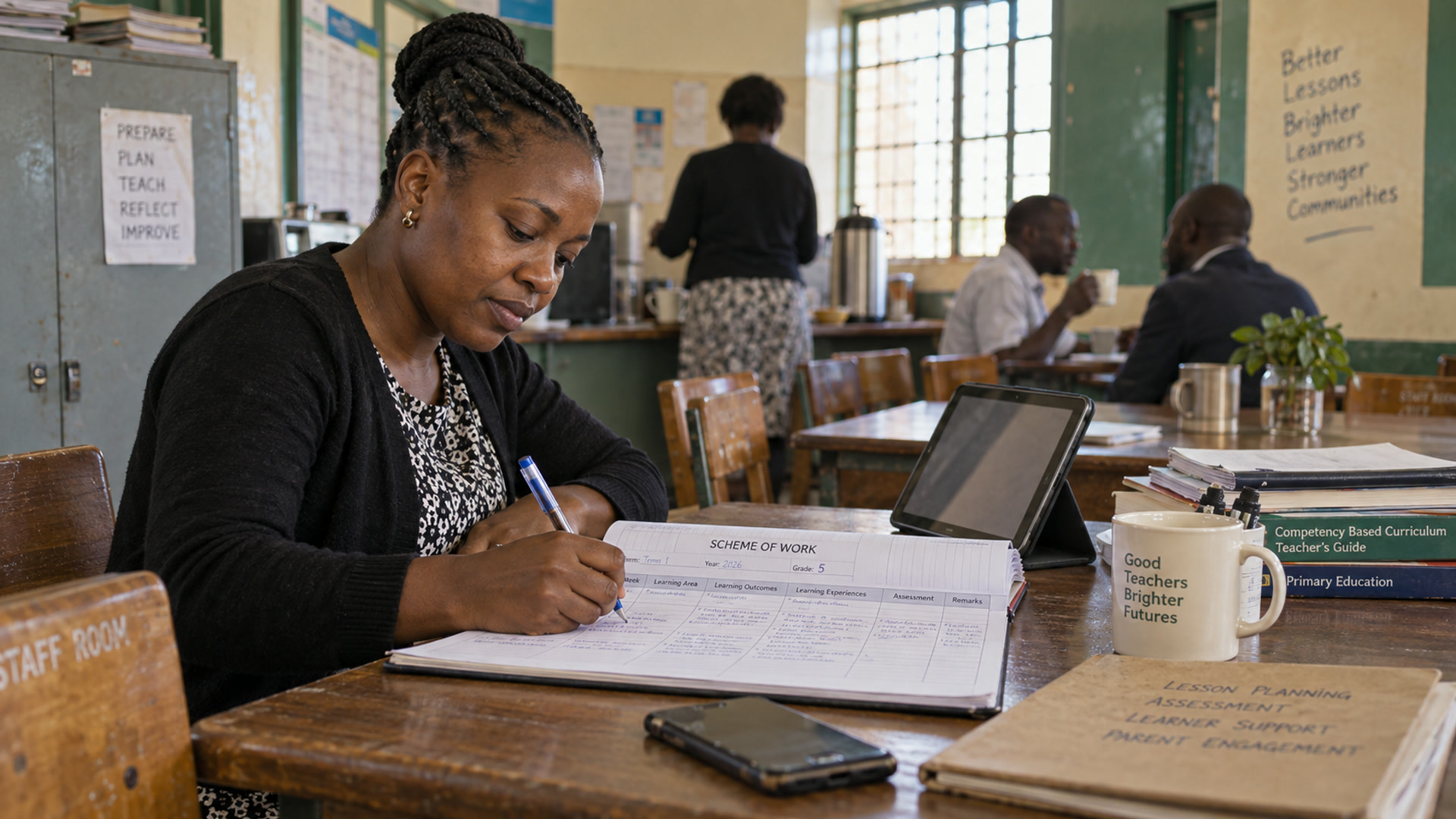
Teaching
The week is meant to flow from the timetable to the lesson
Schemes and lesson plans are in Workspace today. The fuller chain — timetable, scheme, plan, teach, reflect — is in development, so a teacher is not typing the same class details at every step.
Schemes and plans
Term plans and weekly lessons sit with the class. Teachers adapt them. Leaders can review what has been written.
Teach mode
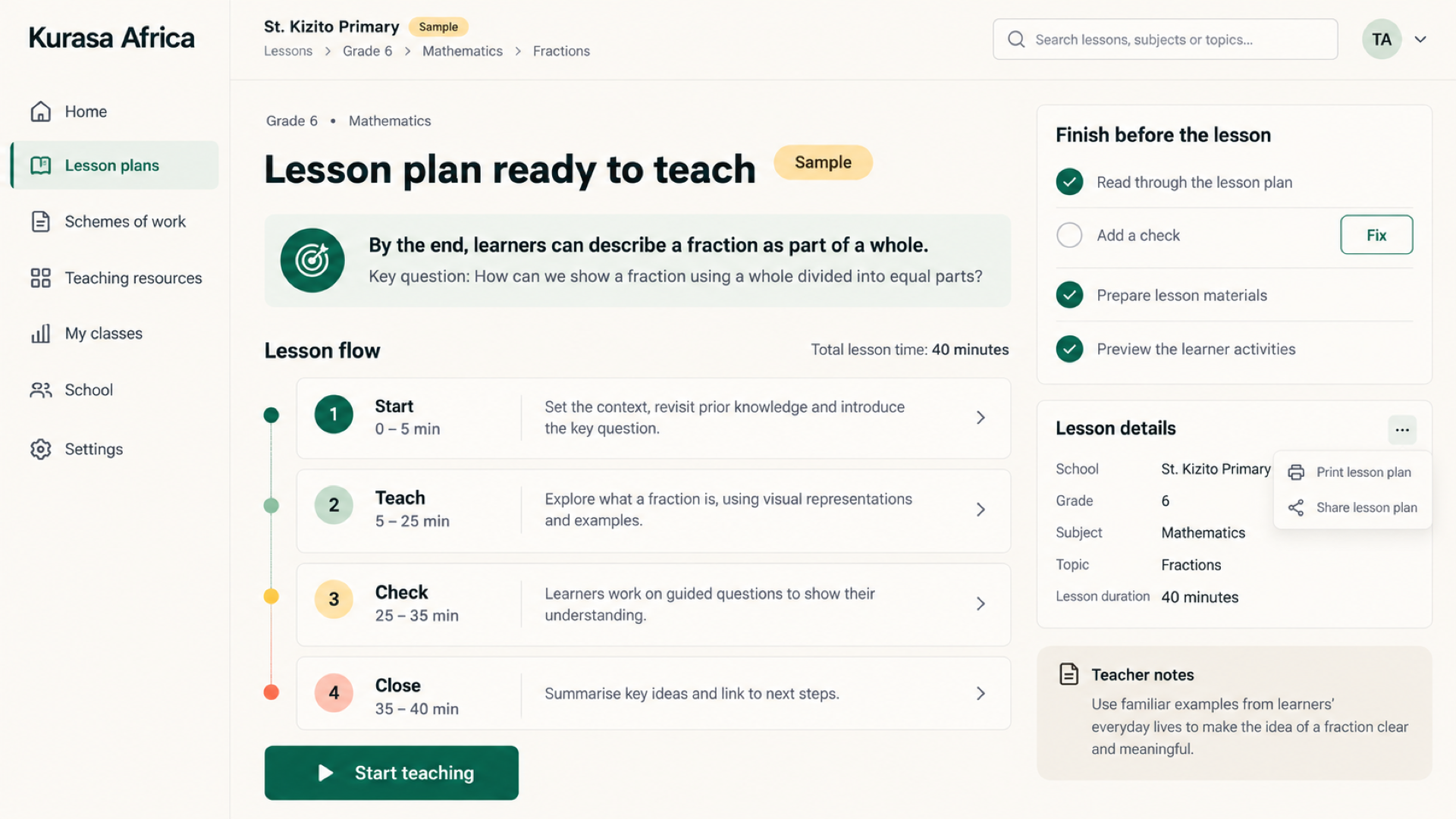
The designed class view walks one step at a time, with a timer, a quick check against CBC levels, and a short reflection that carries into the next plan.
Staff room
A staff room for notices, shared resources and mentoring is in development. It does not score teachers, and it does not show the story behind a learner-support case.
Voices from education practice
Hear from educators and partners
Explore their accounts of lesson preparation, classroom evidence and teacher support.

Kenya · classroom practice
Prepare the lesson. Keep the classroom record.
Stanley Kago · Cheleta Primary
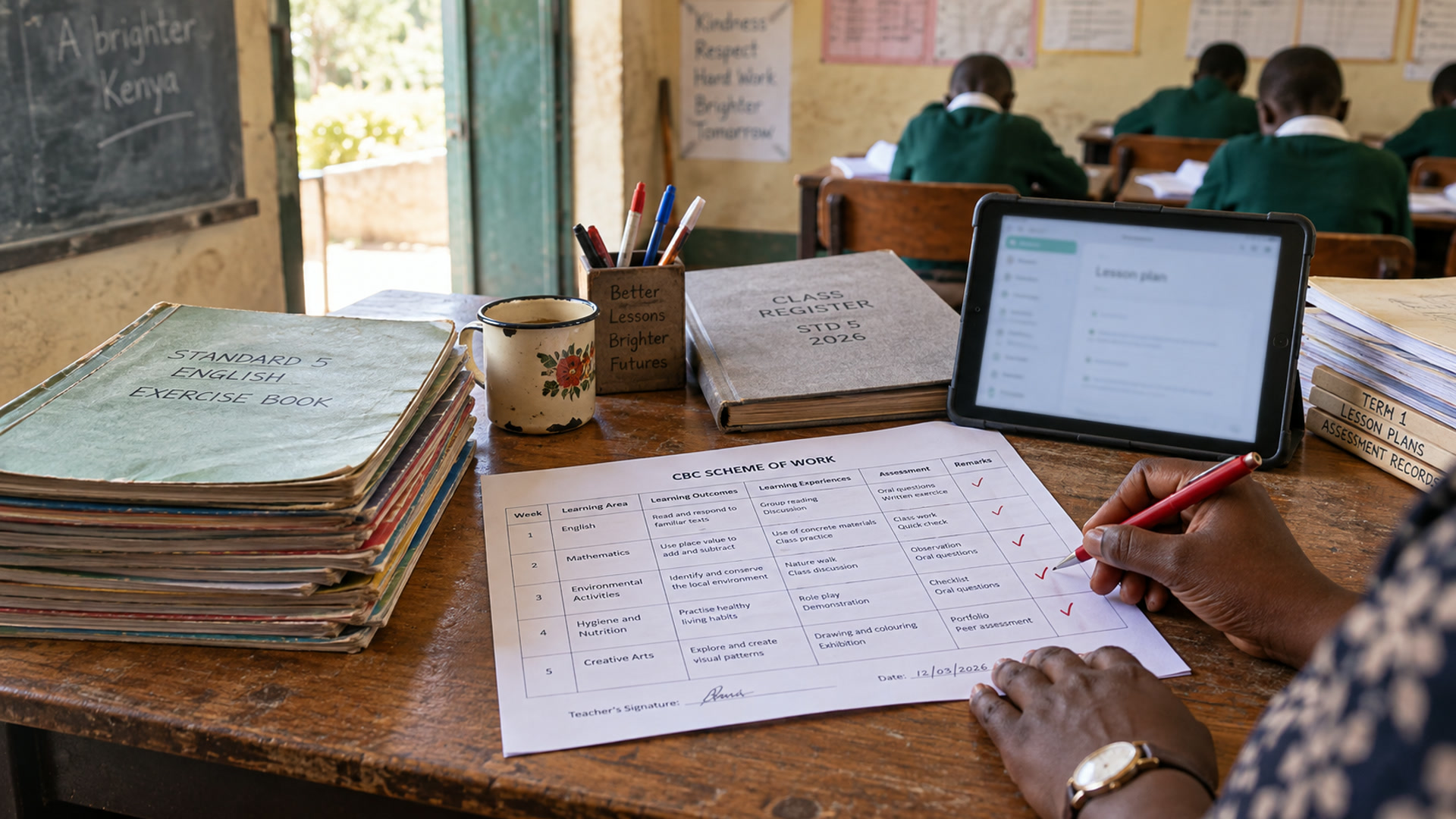
Stanley Kago describes preparing lessons, taking attendance and keeping assessment records at Cheleta Primary.
Original audio: English
Explore teaching planningPrepare a usable plan
Begin with the learning outcome, the evidence you expect to see and the resources available in the classroom. Organize the lesson into steps that a colleague could understand. Keep the scheme and lesson connected so it is clear how today's work fits the wider teaching sequence.
Make planning fit the class
Adapt examples, pacing and activities to the class in front of you. A saved plan can provide a starting point, but the teacher still considers prior learning, language, available materials and support needs. Review the plan after teaching and note what should change next time.
Add AI assistance
Where enabled for your role, use aiDE to prepare a draft activity or teaching document around a clear objective. Check the content, curriculum fit, examples and timing before keeping it. Confirm access and credit arrangements before planning a routine that depends on AI tasks.
Connect objectives, activities and evidence
Start with the learning objective, the resources available and what learners already understand. Build activities that give the class time to practise, then decide what evidence will show progress. A useful lesson plan connects these decisions instead of becoming a document completed only for filing.
Improve the next lesson
After teaching, review the activity that worked, the questions learners found difficult and the time each part needed. Use those observations alongside assessment records to adjust the next plan. Where aiDE assists with a draft, check curriculum language, examples and classroom suitability before teaching from it.
The problem
Teachers lose time rewriting plans that already exist in paper schemes, publisher guides and last term’s notes. When the plan lives apart from attendance and assessment, the week never joins up.
In the classroom
Open the week’s lessons, align activities to CBC outcomes, and walk into period one with a plan you can teach from — not a Sunday catch-up document.
From the classroom record
Schemes that stay usable
Term planners and weekly plans sit where the lesson will be delivered.
Competencies in view
Outcomes stay visible from the plan into formative work — not a separate spreadsheet.
Share across classes
Clone and adapt plans so parallel streams are not reinvented every term.
Workspace · PTA
Plan–Teach–Assess. Not a parent-teacher association.
PTA is Kurasa’s teacher operating model, inside a school workspace. Planning informs teaching, teaching informs assessment, and assessment informs the next plan.
Plan
A CBC-aligned lesson plan for a scheduled class: learning area, strand, substrand, outcomes, and a planned assessment.
Teach
Walk the plan in class. The unit of work is one teacher, one class, one learning area.
Assess
A substrand is complete when every expected indicator has a closed formative batch. Learners who need support become an action list.
Related
Kurasa Workspace
The digital school: teachers plan and assess, leaders see the whole school.
Explore
Assessment
Formative and summative assessment, grading and feedback.
Explore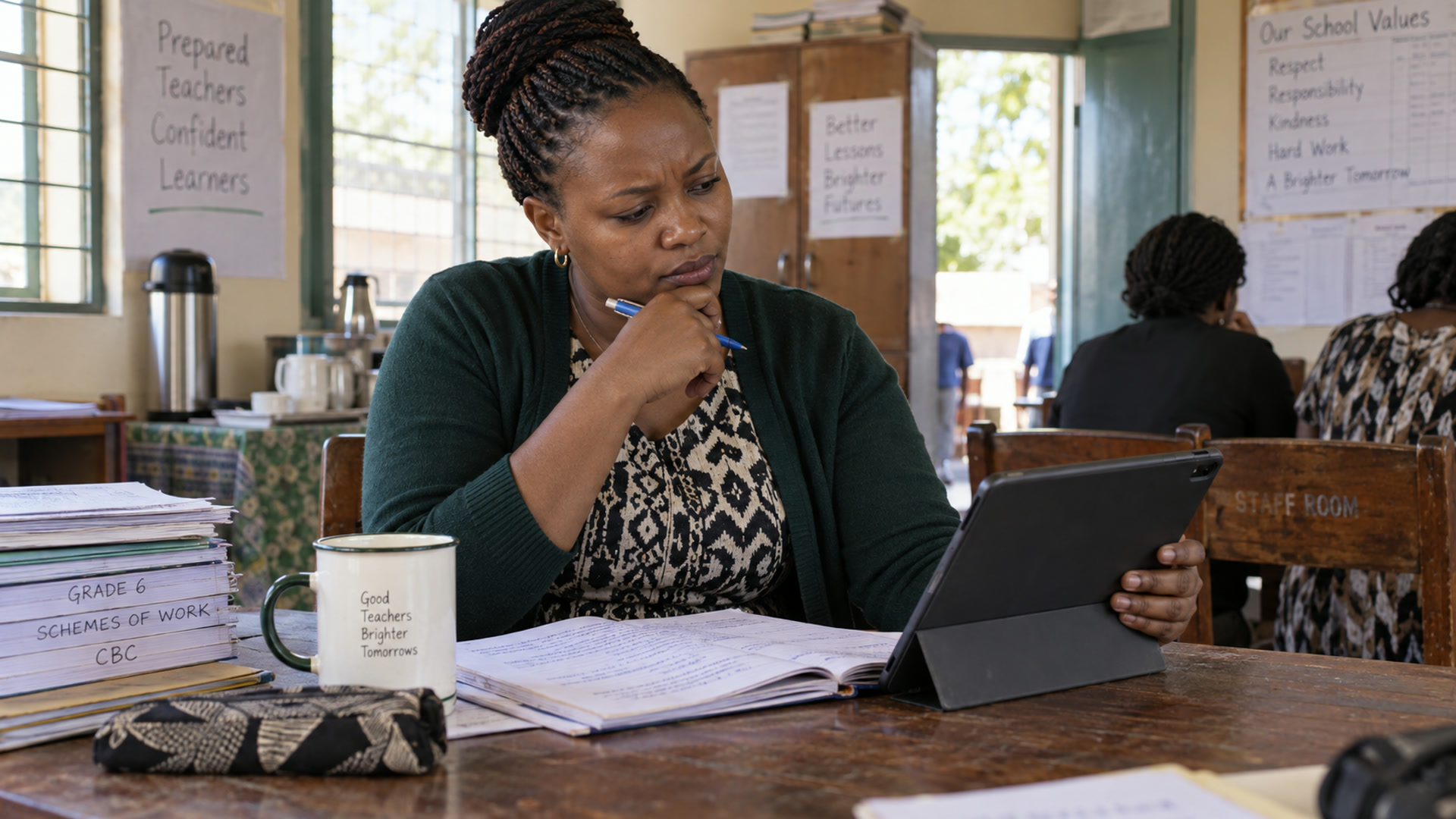
aiDE for teachers
Plan, create, assess and respond, with the teacher in charge.
Explore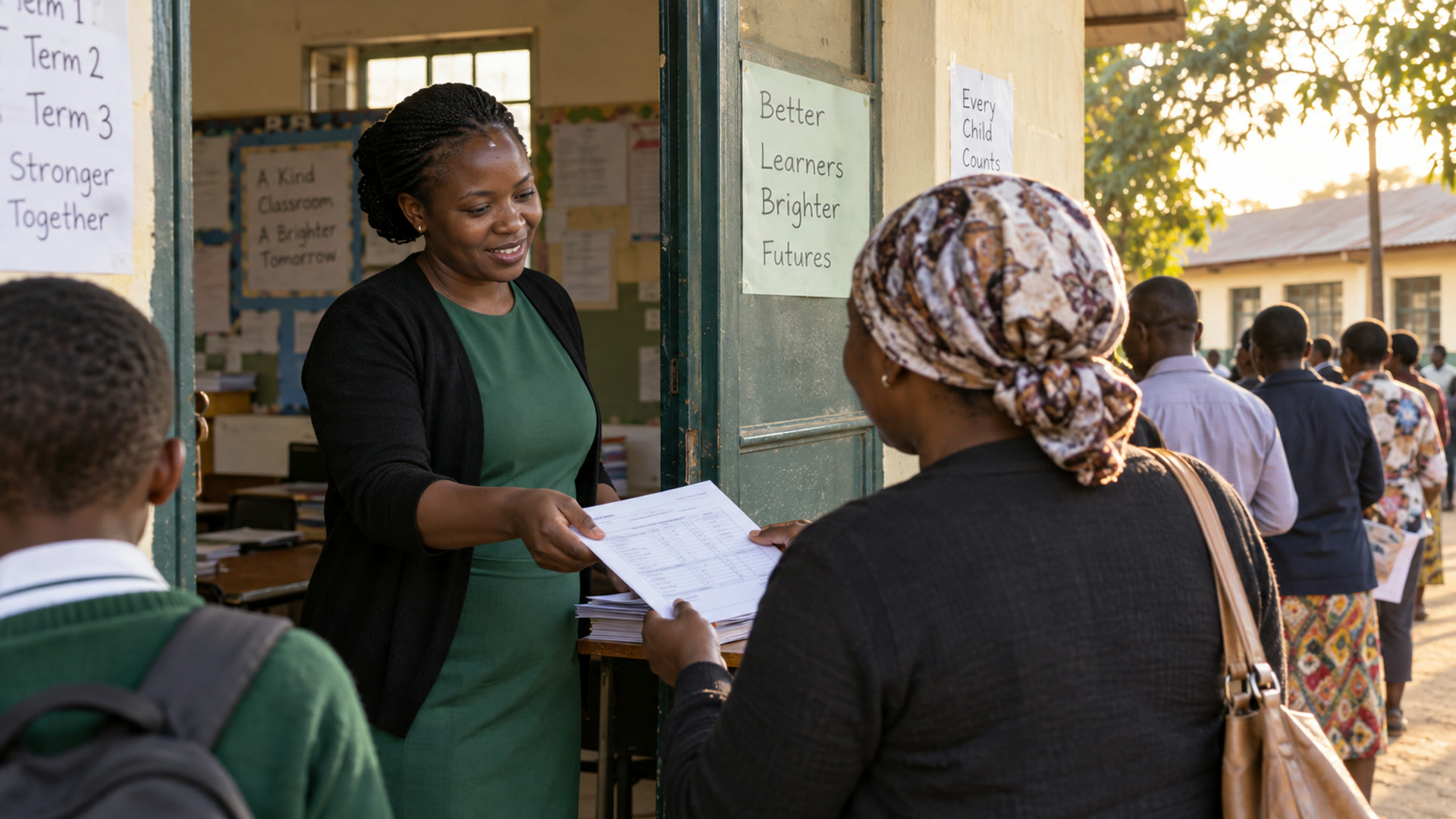
Insights & reports
Learner, class and school reports from the evidence teachers record.
Explore