
Teacher resource
Critical thinking in CBC is a question the class has not memorised
Give critical thinking a place in the lesson through a question that needs reasoning. Let learners use evidence, discuss different approaches and explain a decision. A formative check helps the teacher choose what to revisit.
Practical teaching guide, updated September 2026. Use the examples to discuss lesson preparation, classroom observations and follow-up with your teaching team.
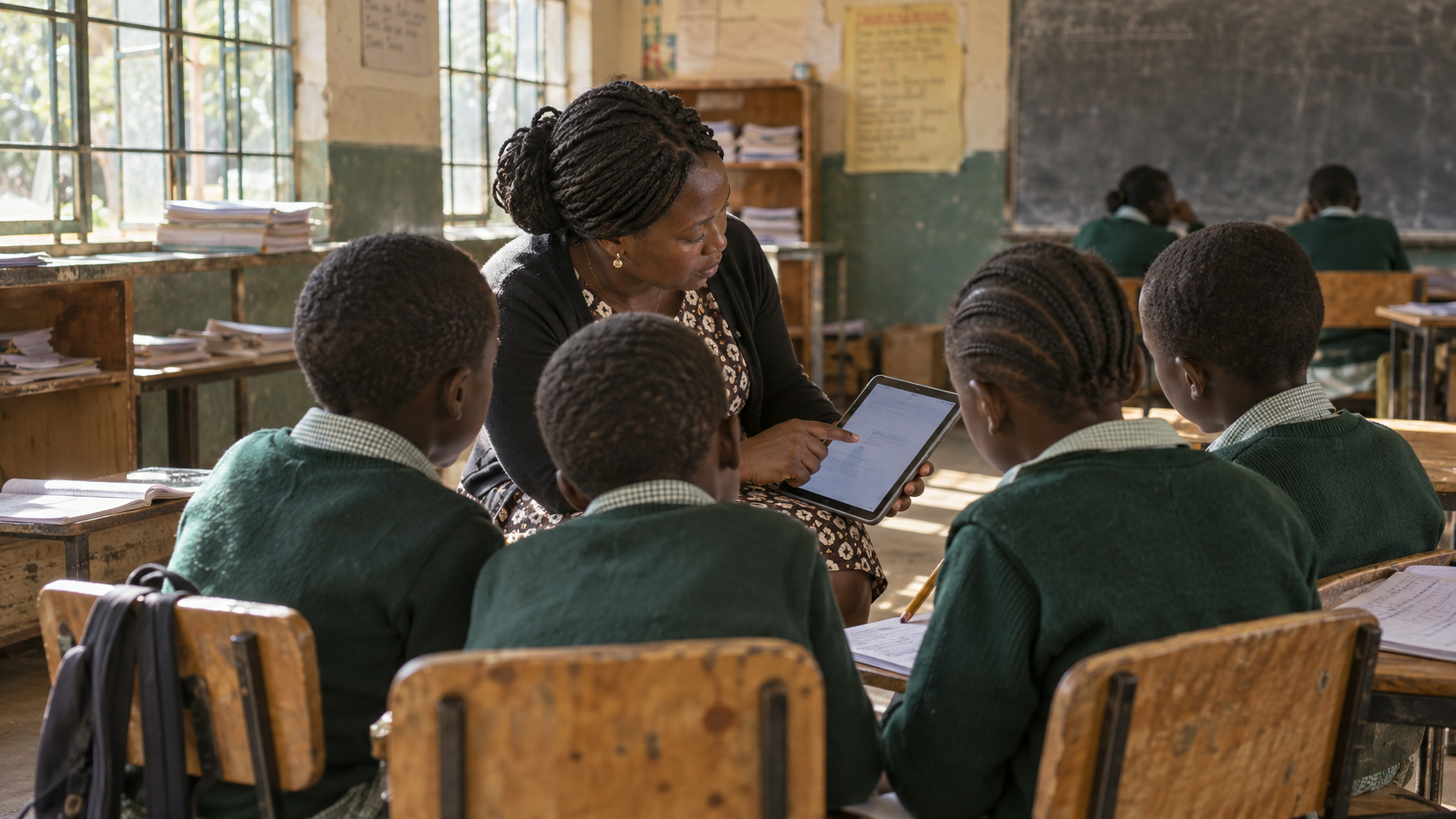
In the lesson
Ask a question whose answer is not a heading. Let learners disagree with a reason. Use a local example — a market price, a weather week, a school rule — so the thinking has an object. Write the criterion you will mark, or the talk is a chat. Creativity is the making version of the same brief.
Planning for classroom use
That CBC, by existing, develops critical thinking. That Kurasa “unlocks minds.” That a Daily Challenge item is a philosophy course. Growth mindset is the reteach after the thinking stalls. Foundational literacy is the floor: you cannot critique a text you cannot read.
Evidence
Record the learner’s explanation against a clear criterion while the discussion is fresh. Use the note in Workspace to decide which example, question or practice opportunity should come next.
Topics Teacher resources
Tags CBC Kenya · Formative assessment · Lesson planning
The prompt
If the answer was already on the board, it was not thinking.
Formative assessment for the check. Creativity for the brief you can make. The CBC guide for the week.