NGOs & implementers · Monitoring & evaluation
Make programme evidence useful to the delivery team
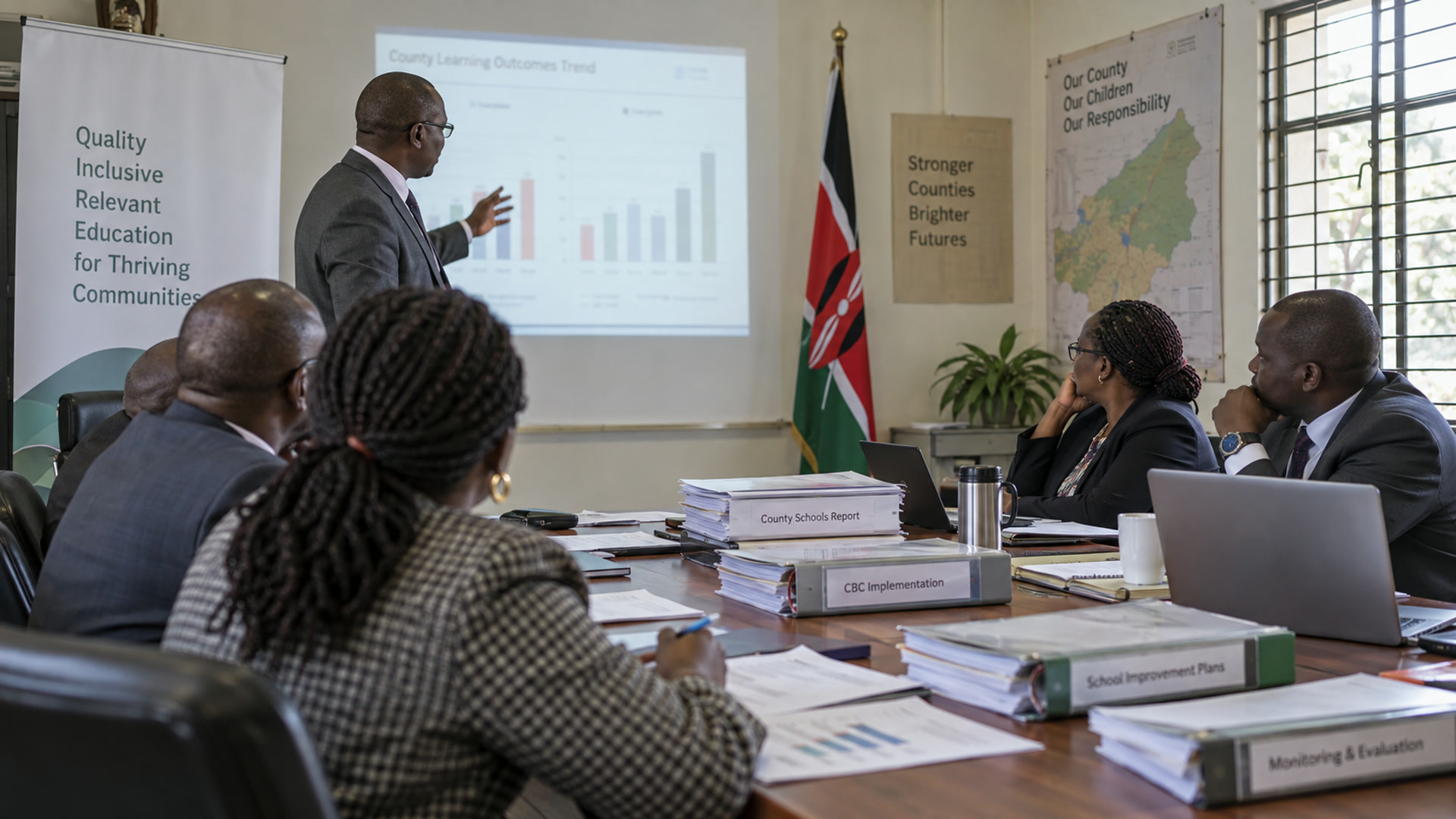
Structure monitoring around indicators, school activity and learning evidence.

Questions to answer each term
- Which schools and teachers took part?
- Which planned activities happened, and which did not?
- Which learner groups were assessed, and how many results are complete?
- What did teachers and delivery staff report as the main barriers?
- Which actions were agreed at the last review, and were they done?
Keep indicators comparable
Fix the definition, unit and period of each indicator before the first report and keep them unchanged across periods. A registered account, a currently active teacher and a user who has ever held a teacher role are three different counts. Kurasa applies the same discipline to its own published figures; the Data and methods page shows how.
Write a usable monitoring framework
For each measure, define the question, source, reporting period and person responsible. Distinguish implementation activity from learning results so the delivery team can interpret both. A small set of well-maintained measures is more useful than an extensive report whose records are incomplete or definitions change between sites.
Explain the limits of each readout
Show which sites and learners are covered, where records are missing and what changed during delivery. Bring teacher and implementation feedback into the review. Kurasa can discuss how supported school workflows fit the programme framework; specialist evaluation design and claims about impact require an appropriate evidence approach.