Skip to content

Teacher resource

Critical thinking in CBC is a question the class has not memorised

CBC listed critical thinking among the competencies. Listing it does not produce it. The February 2024 original promised unlocked minds. This page keeps the period: a prompt that is not in the back of the book, talk that has to use evidence, a formative check before the bell.

Teacher resource, rewritten from the mykurasa.com guide for this site in September 2026. It is not a 60 Decibels percentage. Where a 60dB piece already covers the same weekday job, that piece is a see-also — the figures stay on that ledger.

A teacher marks a small group against indicators on a tablet.

In the lesson

Ask a question whose answer is not a heading. Let learners disagree with a reason. Use a local example — a market price, a weather week, a school rule — so the thinking has an object. Write the criterion you will mark, or the talk is a chat. Creativity is the making version of the same brief.

What we will not claim

That CBC, by existing, develops critical thinking. That Kurasa “unlocks minds.” That a Daily Challenge item is a philosophy course. Growth mindset is the reteach after the thinking stalls. Foundational literacy is the floor: you cannot critique a text you cannot read.

Evidence

Close the check while the argument is warm. Workspace holds that mark against an indicator. PSL is a different clock — reasoning under time, for schools that sit it. Do not mix those clocks.

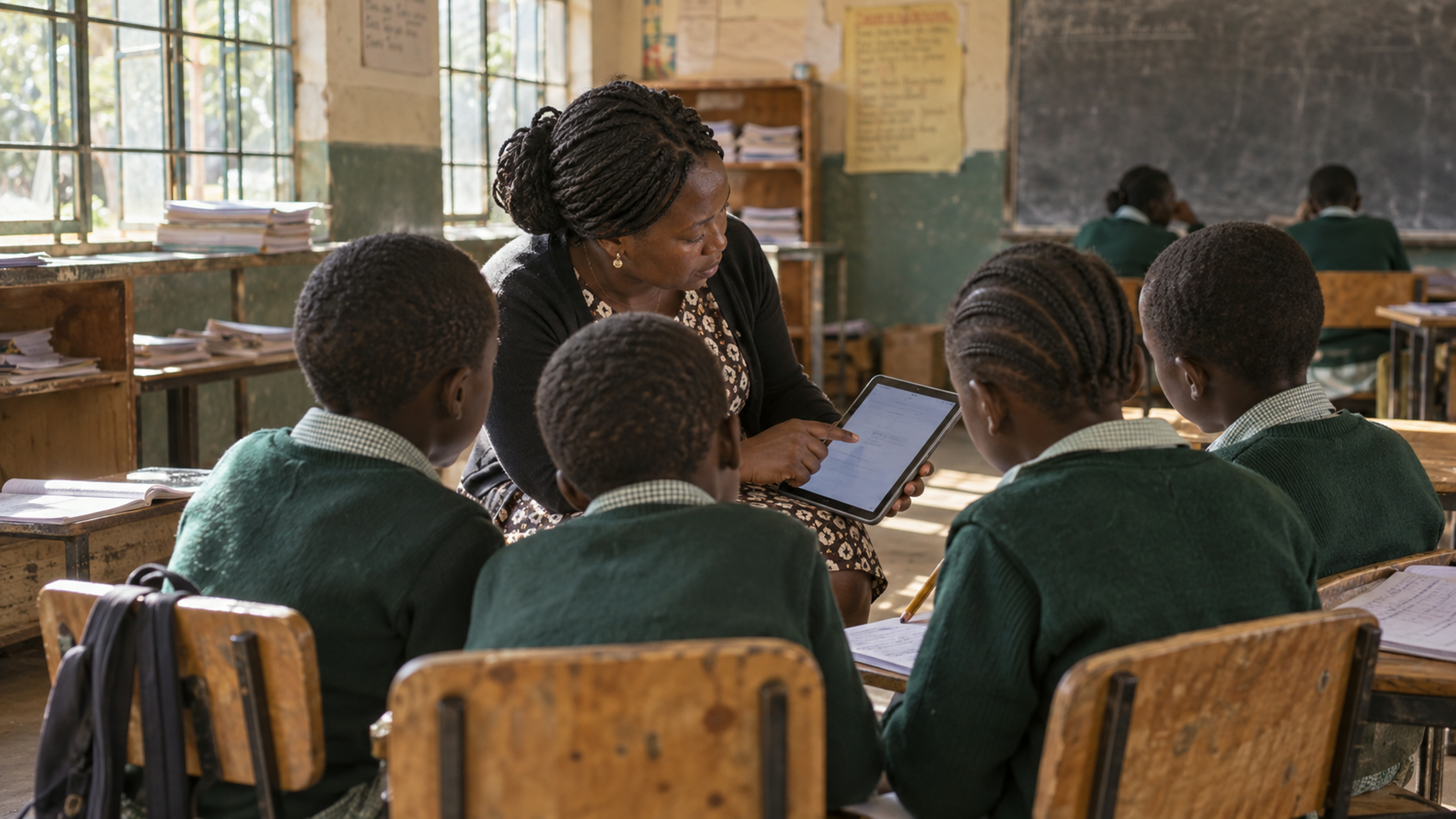
A teacher marks a small group against indicators on a tablet.
A small group, a tablet, a question still open. Dust in the light. Not a debate-club stage.

The prompt

If the answer was already on the board, it was not thinking.

Formative assessment for the check. Creativity for the brief you can make. The CBC guide for the week.